

Umami-Rich Vegetarian Delight: Mushroom Bourguignon Recipe
This umami-rich dish provides a delicious vegetarian alternative to the traditional beef bourguignon. Everyone at the table will enjoy this Rich & Flavorful Mushroom Bourguignon, even the carnivores in the crowd.
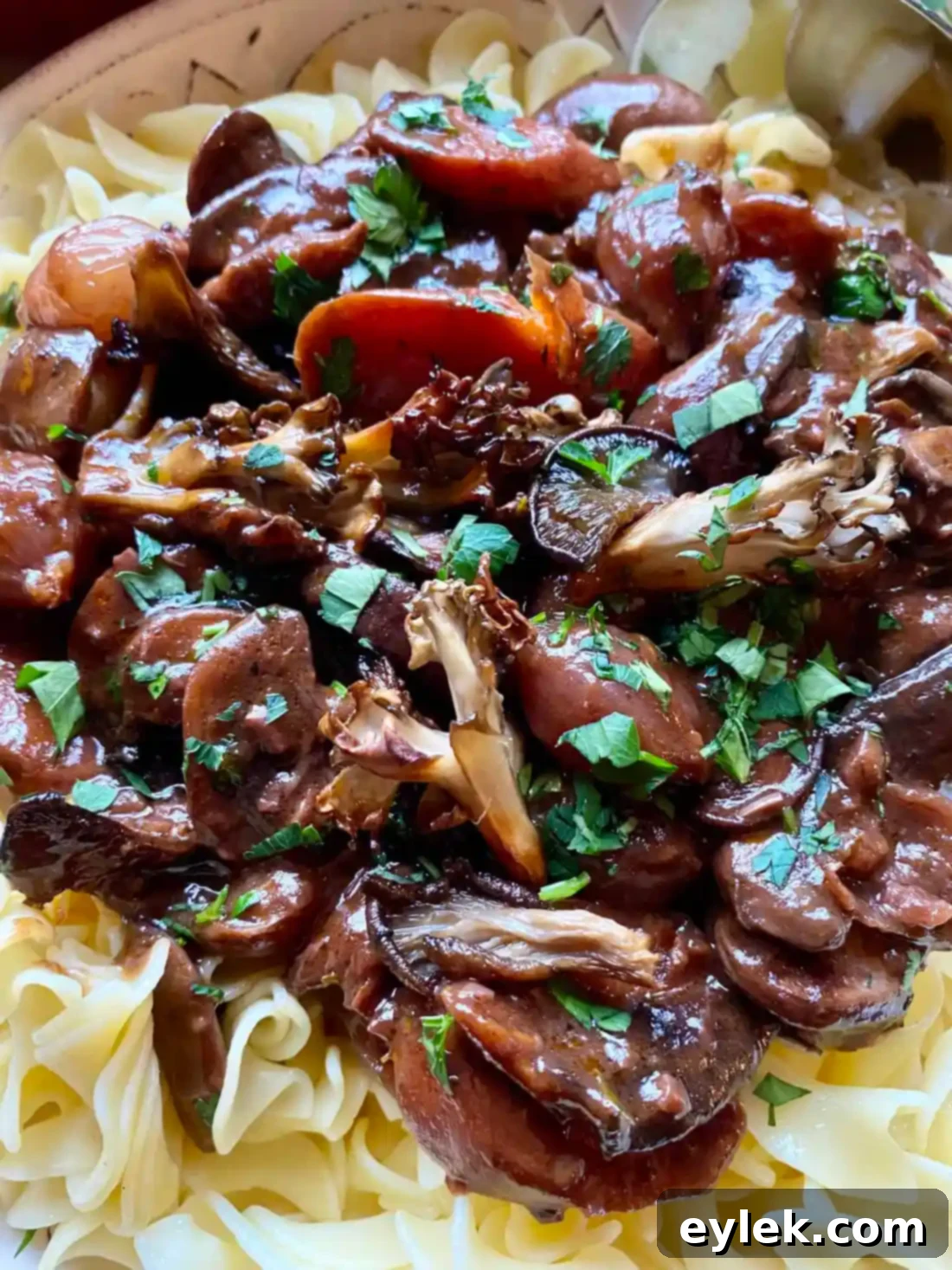
Full credit for this deliciousness must go to the folks at Bon Appétit. Don’t be intimidated by the substantial list of ingredients and instructions. This mushroom bourguignon recipe is absolutely worth the effort. The depth of flavor achieved through the combination of various mushrooms, red wine, and aromatic herbs creates a truly unforgettable culinary experience.
What You’ll Need to Make Mushroom Bourguignon
Let’s take a look at the ingredients needed to create this masterpiece. Don’t let the lengthy list intimidate you; each ingredient plays a crucial role in building the complex and satisfying flavor profile of this vegetarian bourguignon.
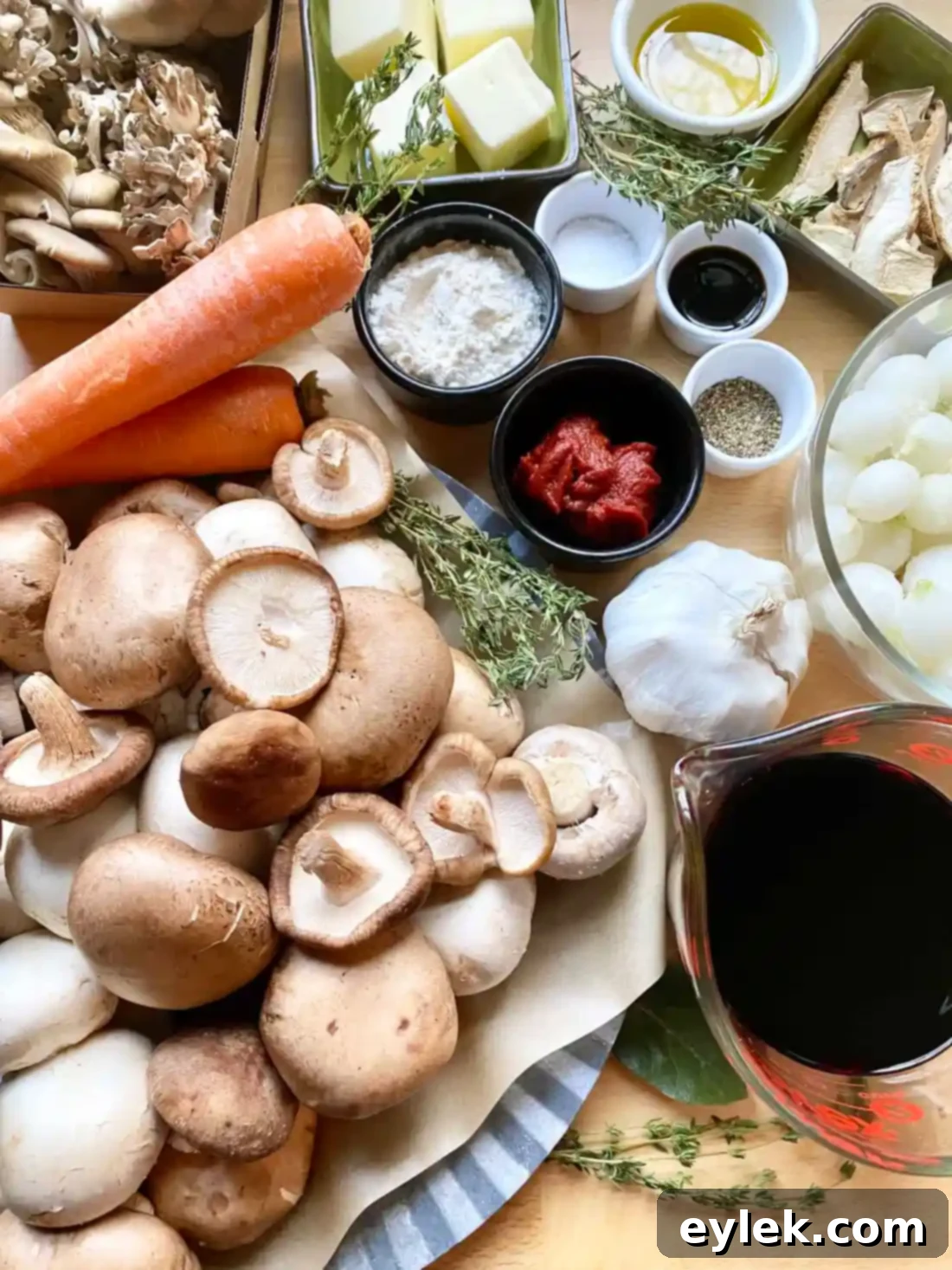
- Dried Mushrooms: Use porcini or shiitake. The drying process concentrates the mushrooms’ natural flavors, resulting in a more potent umami taste. Soaking them in boiling water creates a flavor-packed broth to be added to the dish.
- Boiling Water: Essential for rehydrating the dried mushrooms and creating a flavorful broth. The hot water extracts the deep, earthy flavors from the dried mushrooms, which form the base of the sauce.
- Unsalted Butter: Using unsalted butter allows the natural butter flavor to shine through without the influence of added salt, offering greater control over the sodium level in the final dish.
- Mixed Fresh Mushrooms: Trimmed & cut into 1-inch pieces. Using a combination of crimini, button, portobello, oyster, and/or baby shiitake will lend flavor and texture to your bourguignon. Each type of mushroom brings its unique qualities to the table, contributing to the dish’s overall complexity.
- Flour: Unbleached all-purpose flour is ideal for thickening the sauce. Organic, non-GMO flour, free of glyphosate, is preferred for its purity and health benefits. Gluten-free flour can be used as an alternative for those with dietary restrictions.
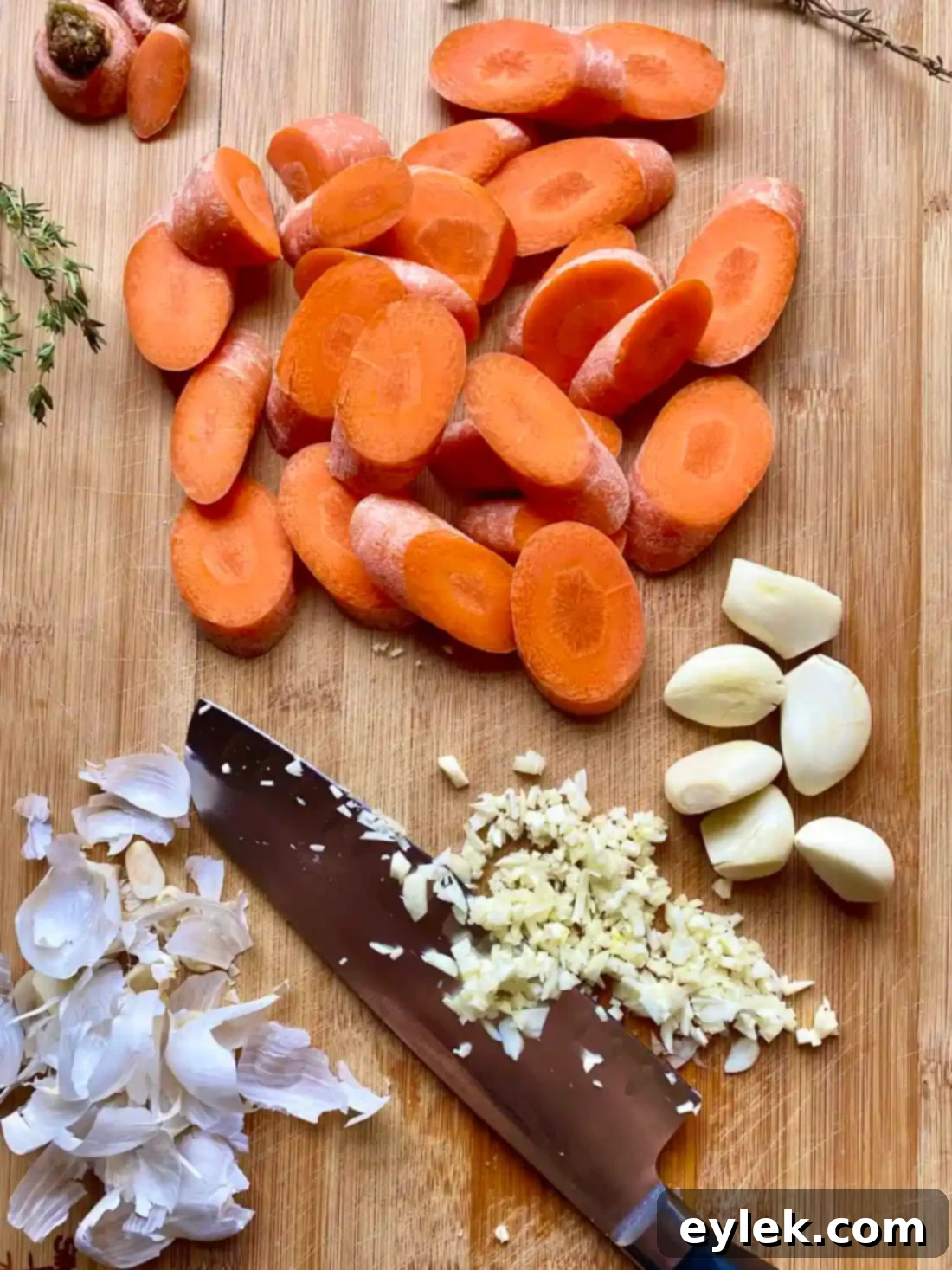
- Fresh Carrots: Peeled & sliced ½-inch thick on a deep diagonal. Fresh carrots are preferred over frozen since they hold up well during the braising process, adding a touch of sweetness and texture to the dish.
- Fresh Garlic: Finely chopped, garlic infuses the bourguignon with its pungent and aromatic flavor, adding depth and complexity to the overall taste.
- Pearl Onions: Frozen pearl onions are convenient and readily available in most stores. Peeled fresh pearl onions would be an excellent alternative, offering a slightly sweeter and more delicate flavor.
- Tomato Paste: Tomato paste adds a burst of umami, with its concentrated sweetness and mild acidity. Double-concentrated tomato paste (found in a handy tube) is recommended, but regular paste is fine.
- Dry Red Wine: Dry red wine adds flavor, acidity, and complexity. The alcohol in wine helps release flavors in other ingredients and breaks down fats. Burgundy is the traditional choice when making bourguignon dishes, but you can also use Cabernet Sauvignon, Pinot Noir, Cabernet Franc, or Syrah. Choose a wine that you would enjoy on its own. Avoid anything labeled as “cooking wine.”
- Fresh Thyme Sprigs: Fresh thyme has a distinctive, earthy, and slightly peppery flavor with hints of sweetness and a subtle, floral aroma. The sprigs are added as they are, then removed before serving.
- Dried Bay Leaf: Bay leaf adds a subtle, herbal, and slightly floral flavor, with notes of thyme and oregano. It will be removed & discarded before serving.
- Soy Sauce: Using the low-sodium variety is highly recommended so that you can control the salt content in the final dish. For gluten-free needs, use low-sodium gluten-free tamari.
- Kosher Salt: If needed, table salt can be used with caution. Table salt is finer and more dense than kosher salt, so a teaspoon of table salt will contain more actual salt than a teaspoon of kosher salt. When substituting, use about two-thirds the amount of table salt specified in a recipe using kosher salt.
- Freshly Ground Black Pepper: Adds a pungent and aromatic kick, enhancing the savory flavors of the dish.
- Extra-Virgin Olive Oil: Single-source EVOO from Italy is preferred. Less processing equals healthier, more delicious olive oil.
- Fresh Maitake or Oyster Mushrooms: Or a combination of both. Torn into bite-size pieces, these mushrooms add a unique texture and flavor to the dish.
- Red Wine Vinegar: As an alternative, sherry vinegar can be used. The acidity of wine vinegar helps to balance and enhance the flavors.
- Fresh Flat-Leaf Parsley: Finely chopped. Totally optional but highly recommended. The tender fresh herb is always preferred over the dried variety. Fresh parsley has a clean peppery taste with a touch of earthiness, adding brightness to the final dish. Save some to sprinkle over each bowl when serving.
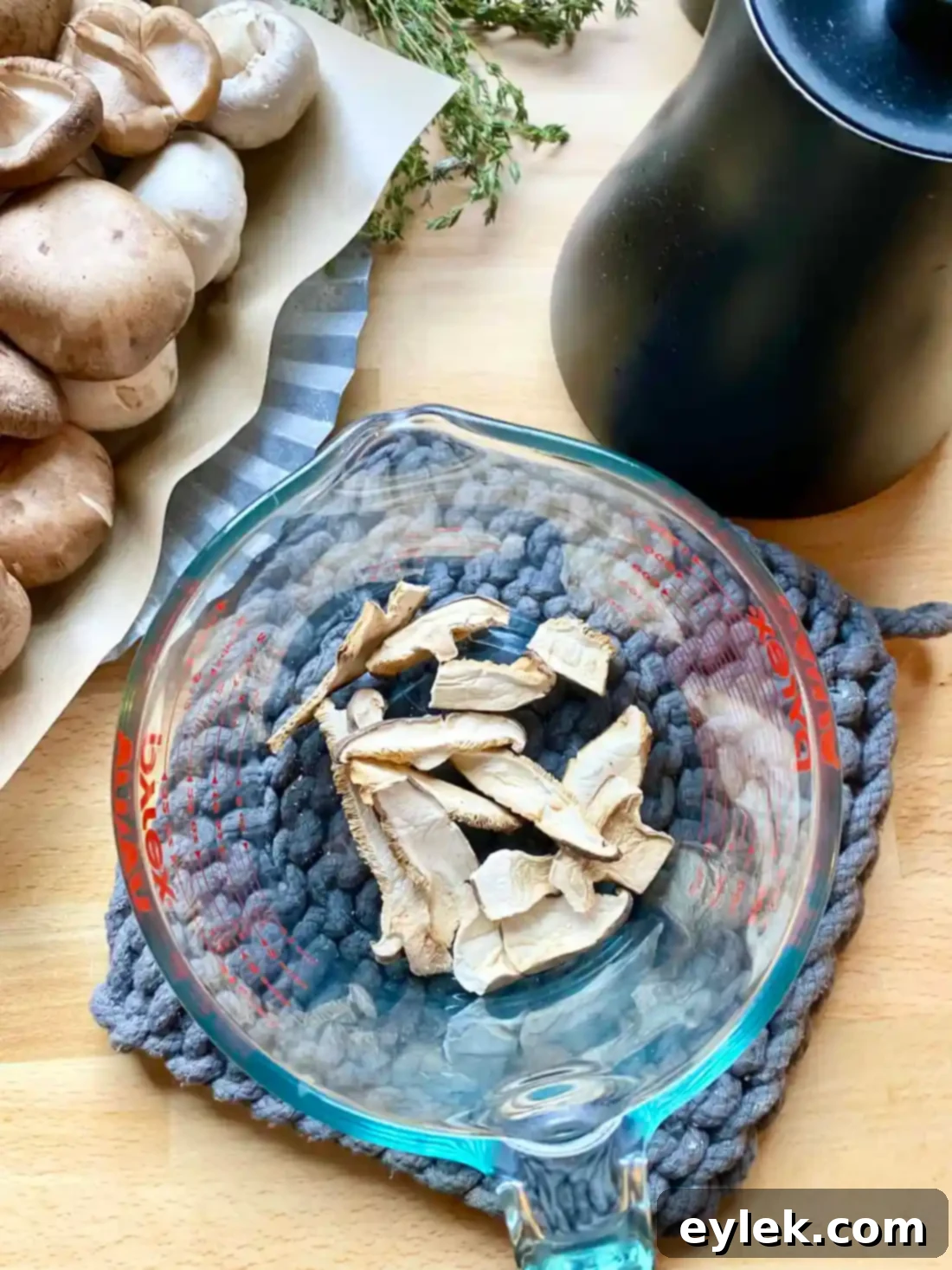
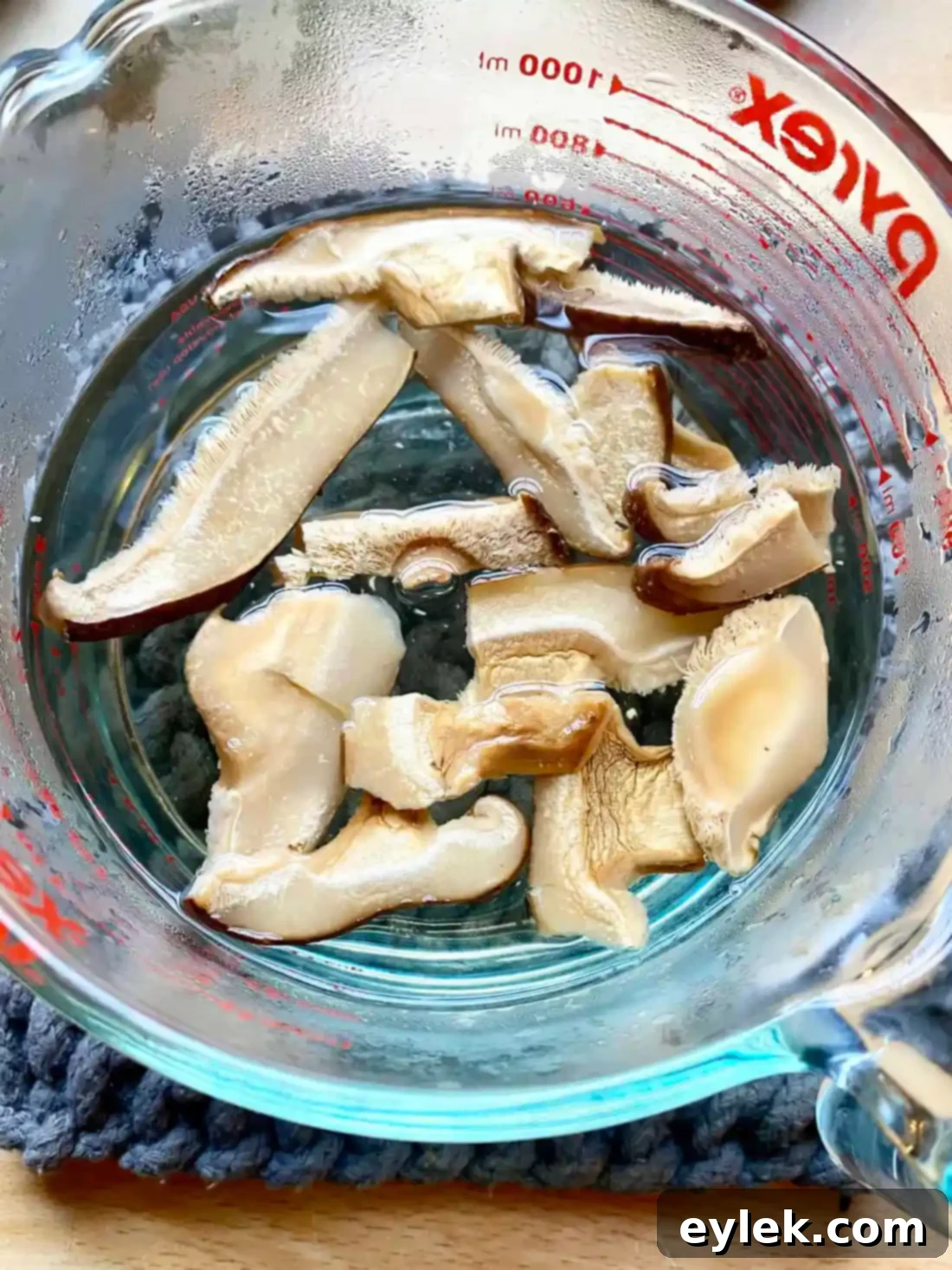
- In a heatproof bowl, add the dried porcini or shiitake mushrooms to the boiling water.
- Give it a quick stir and let them soak until ready to use.
- You’ll be using the soaking liquid as an ingredient in the dish.
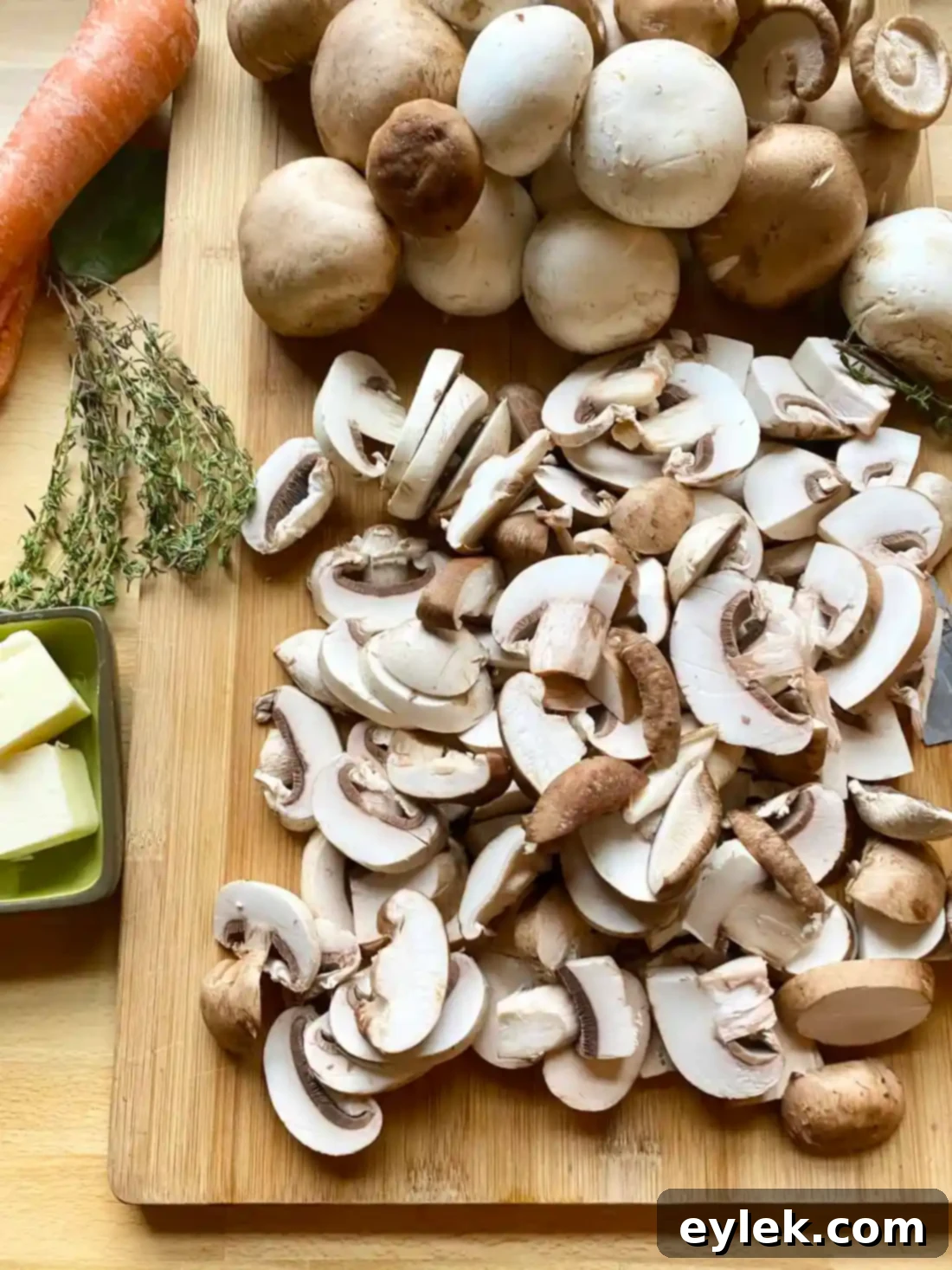
- Melt 2 tablespoons unsalted butter in a large high-sided skillet over high heat.
- Your skillet or braiser should have a capacity of at least 3½ quarts.
- Also, you’ll need a tight-fitting lid later on for the braising process.
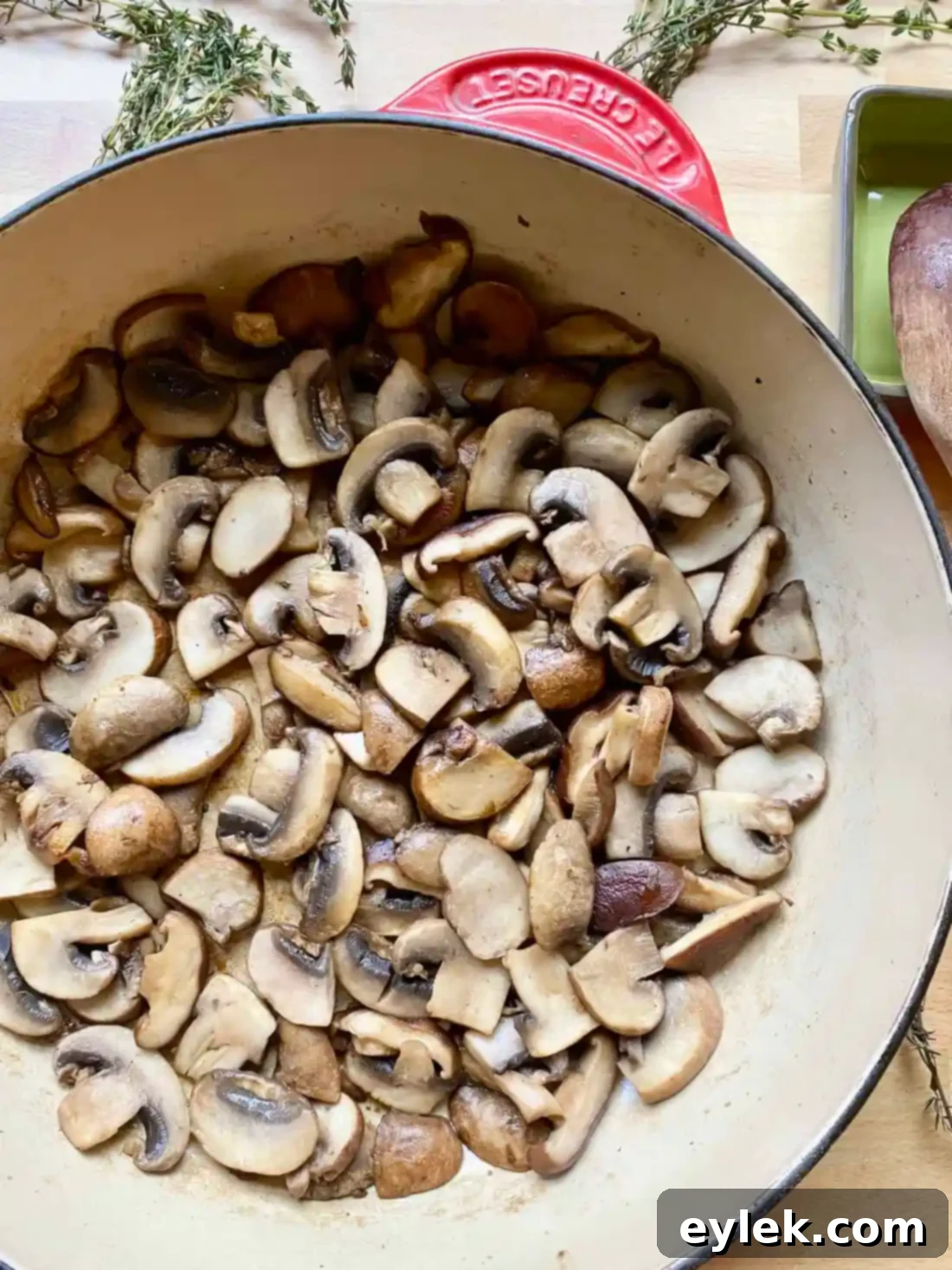
- Add half of the mixed fresh mushrooms.
- Cook, stirring occasionally, until the mushrooms release their liquid.
- The mixture should come to a simmer in about 5 minutes.
- Continue to cook for 6 to 8 minutes more, stirring occasionally, until liquid evaporates.
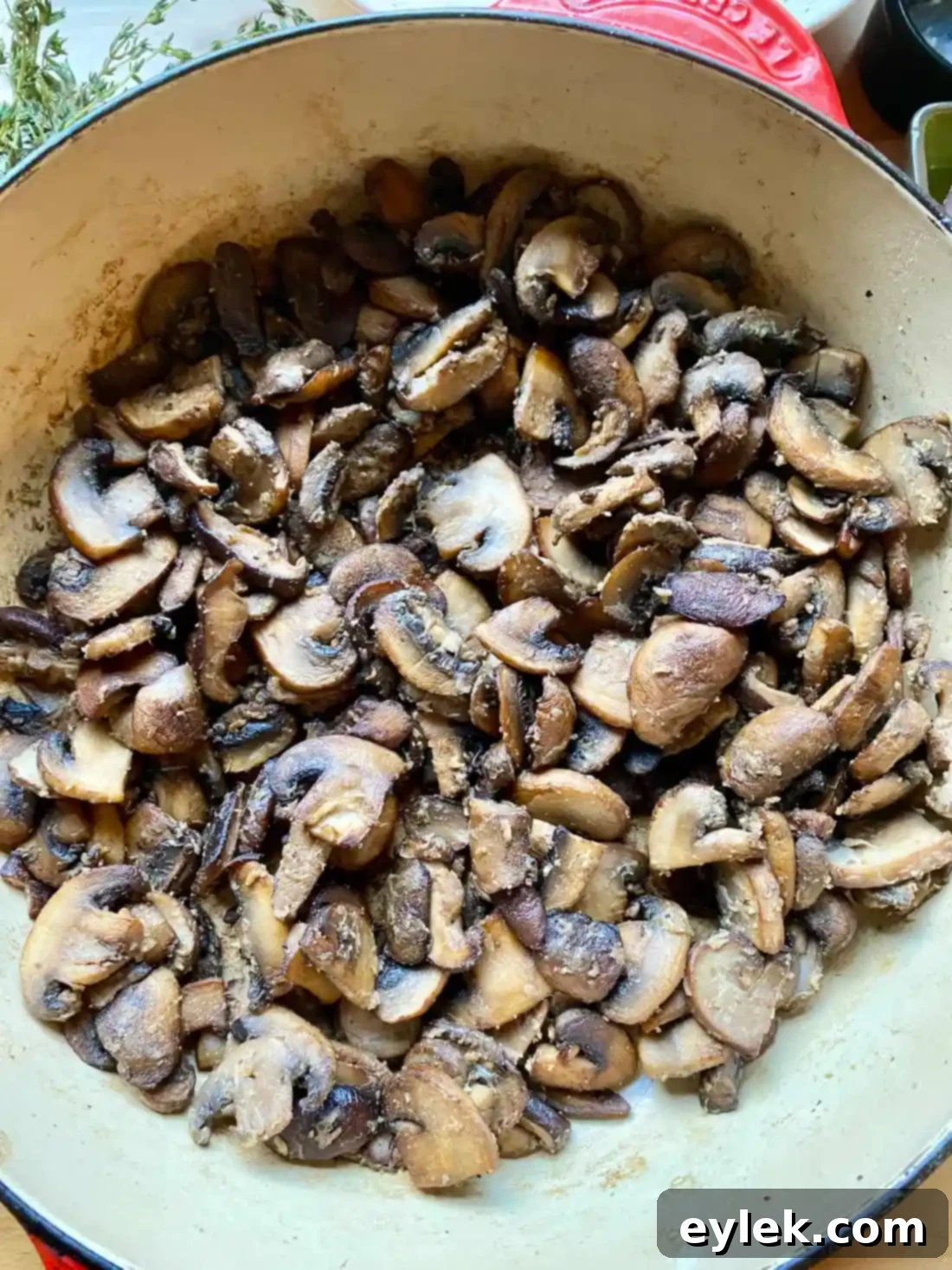
- The mushrooms should now be a golden brown.
- Using a slotted spoon, transfer the caramelized mushrooms to a medium bowl.
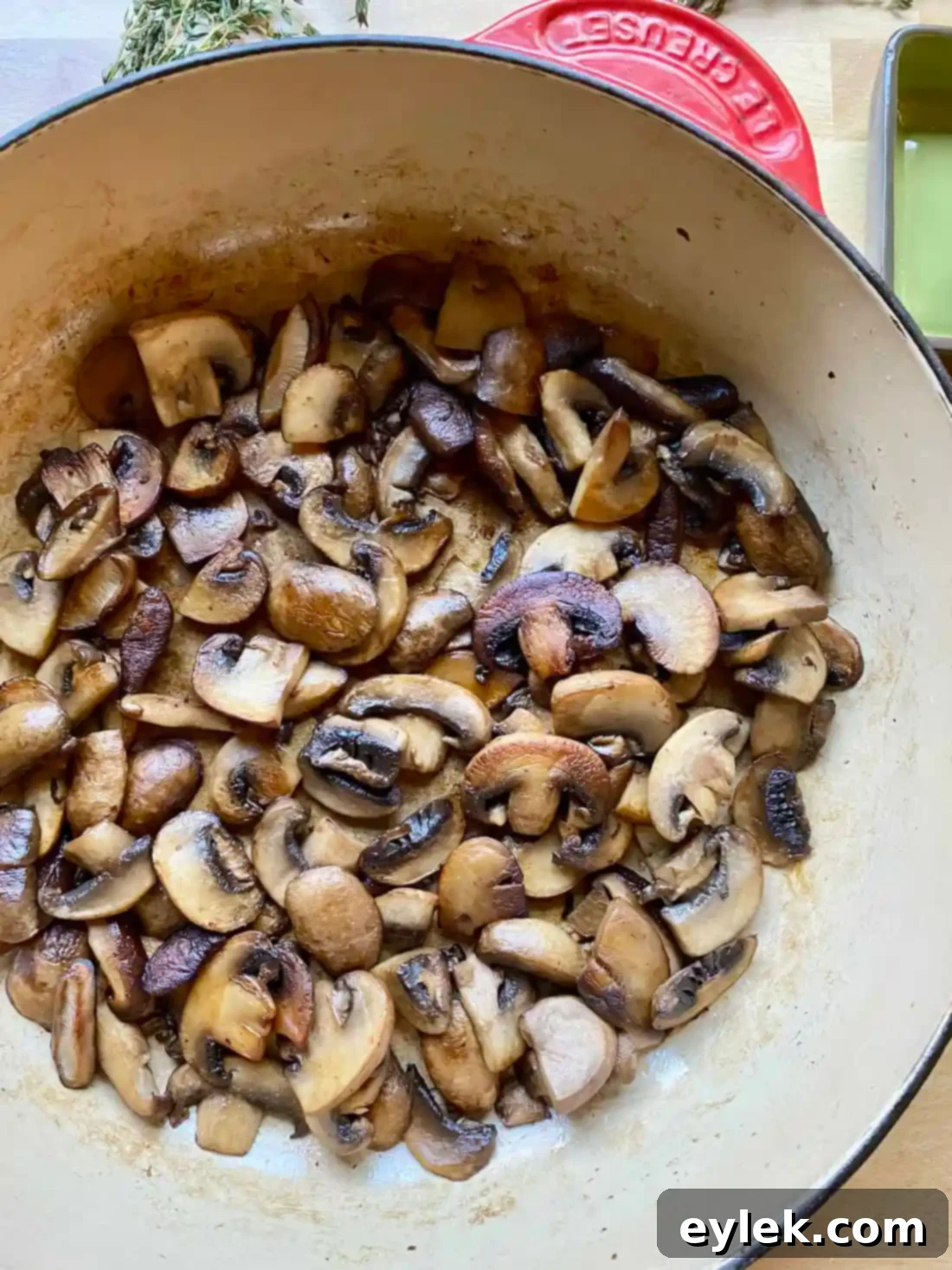
- Repeat the process with another 2 tablespoons unsalted butter and remaining mixed fresh mushrooms.
Caramelizing the mushrooms is very important, so don’t rush the process. Similar to when you heavily sear your meat for a stew or pot roast, you’re building a rich flavor base.
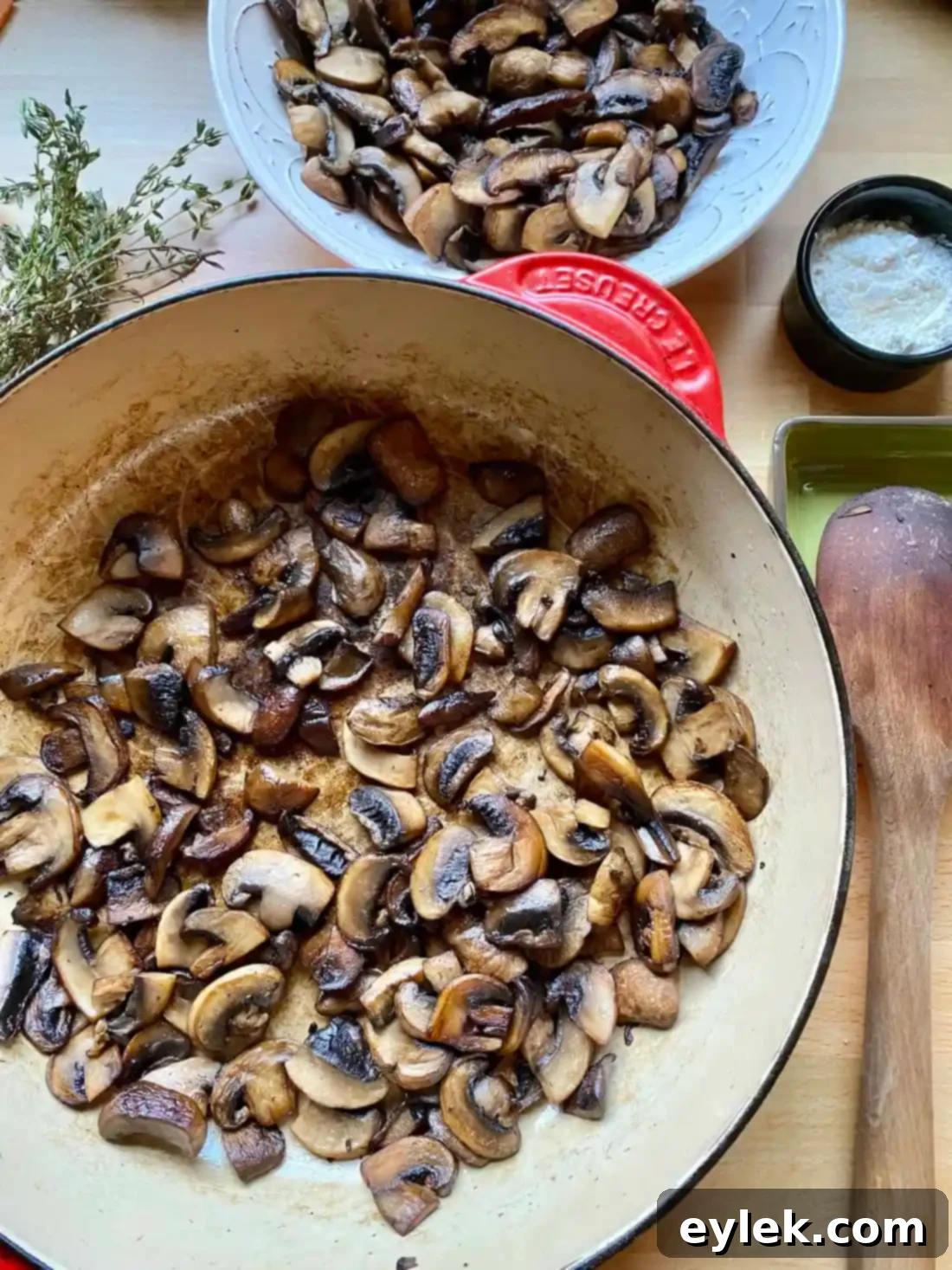
- Return the first batch of mushrooms to the skillet.
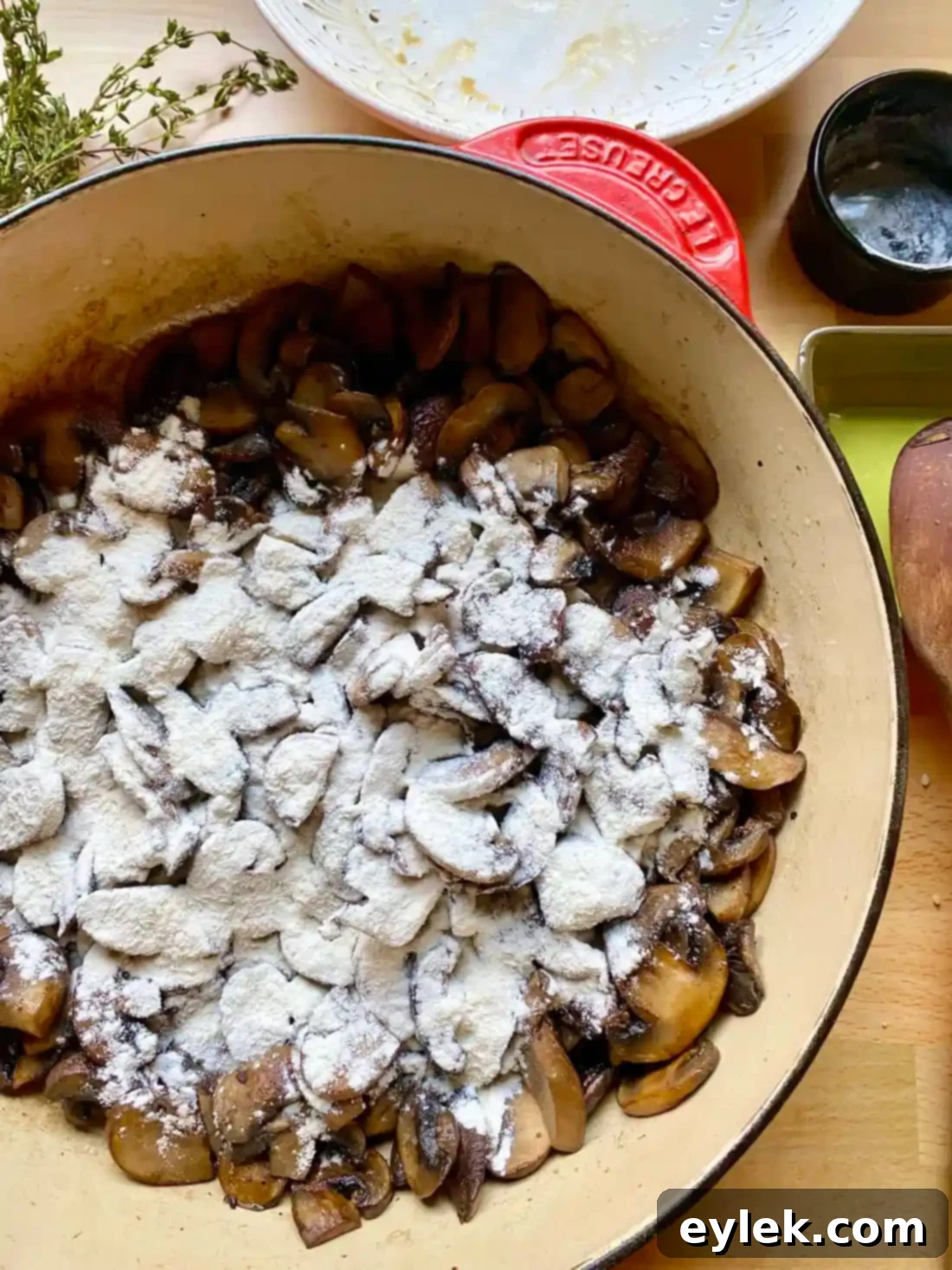
- Sprinkle the flour evenly over the caramelized mushrooms.
- Cook, stirring often, until well incorporated for about 2 minutes.
- The flour may clump but will smooth out later in the braising process.
- Transfer the mushrooms back to the medium bowl.
- Scrape the pan to include as much flour as possible.
- Set aside until needed.
- In the same skillet, melt 2 tablespoons of the unsalted butter over medium heat.
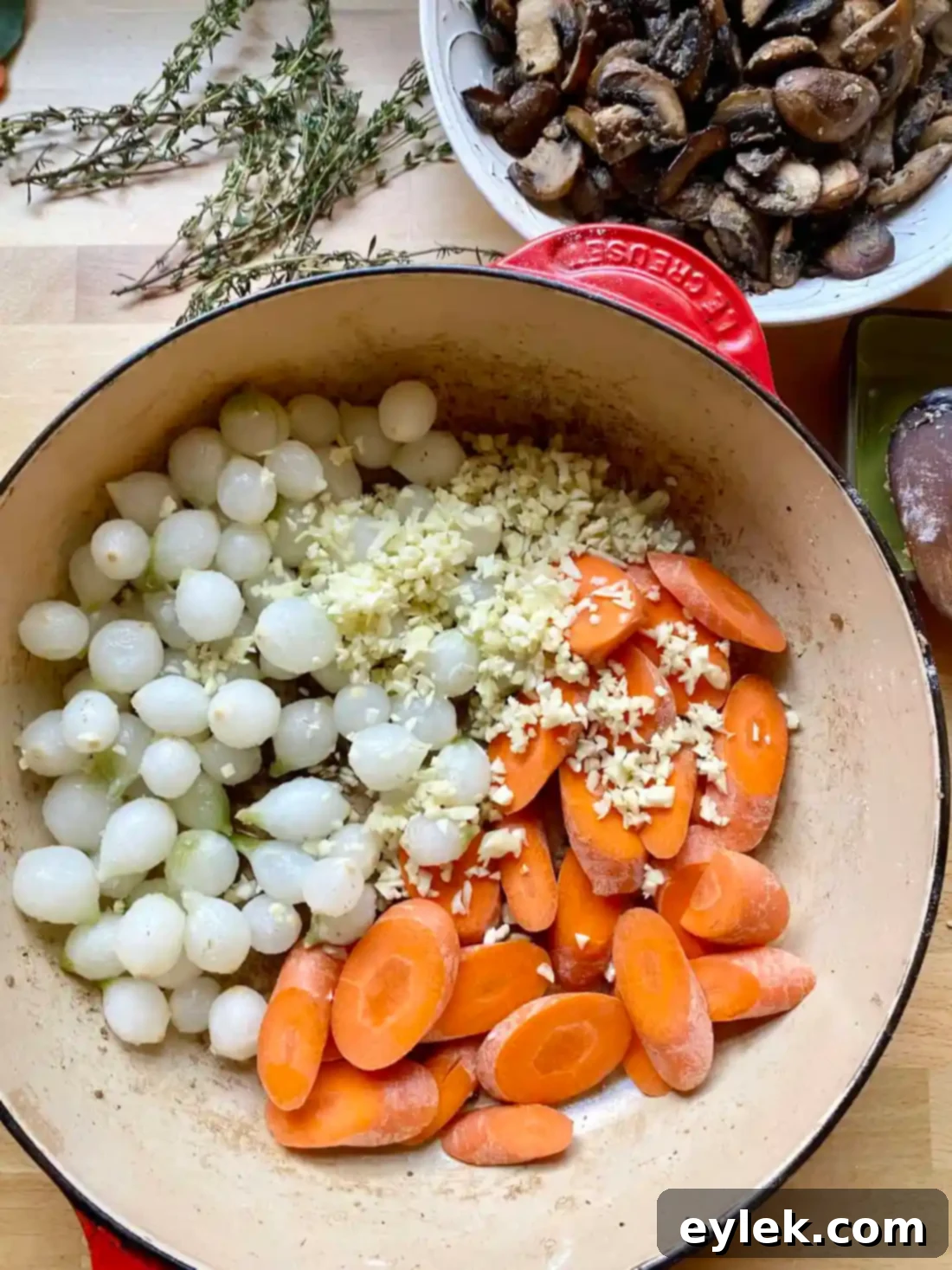
- Add the sliced carrots & finely chopped garlic along with the frozen pearl onions.
- Cook, stirring often, until the vegetables are softened around the edges, for about 6 to 8 minutes.
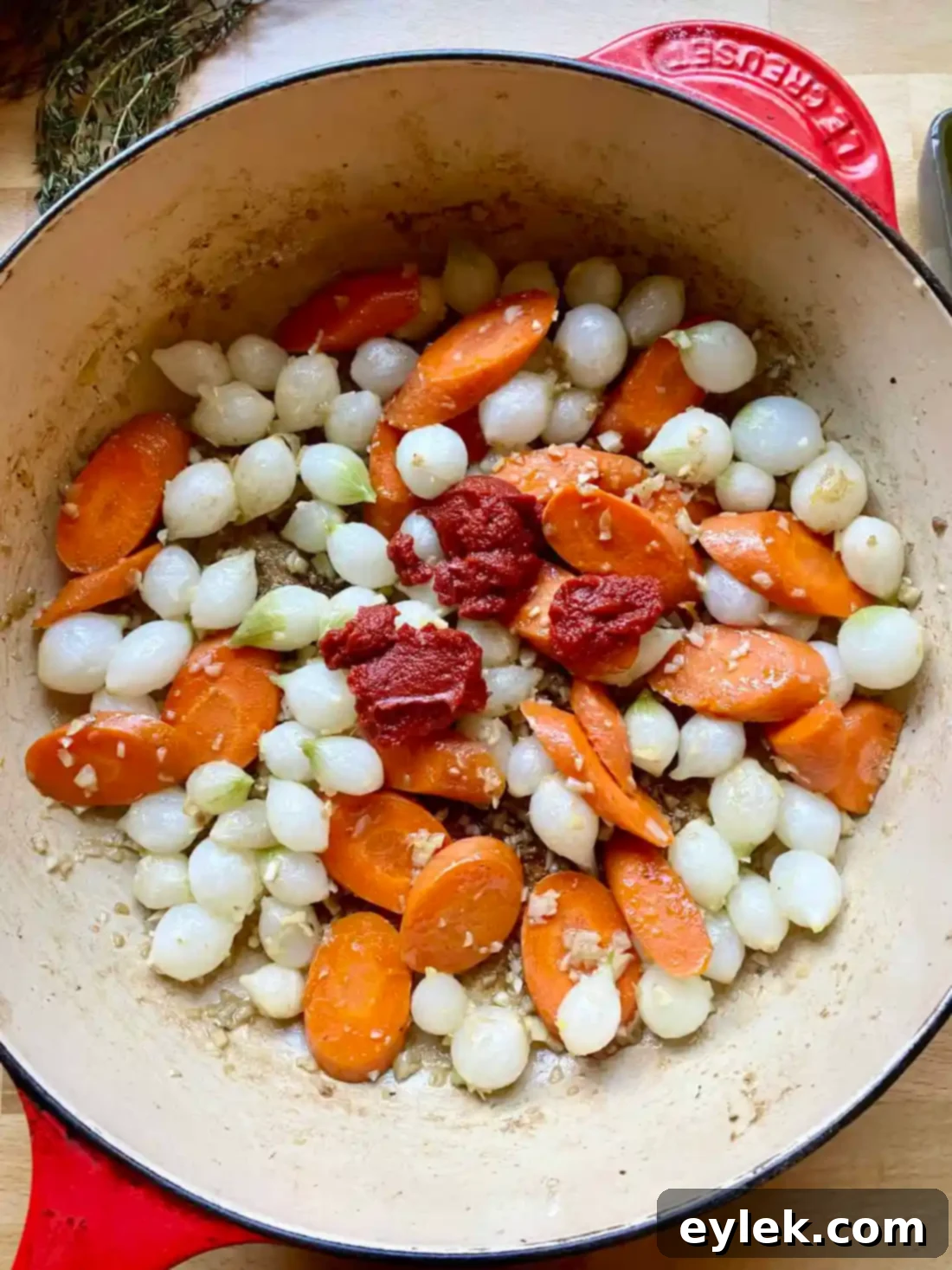
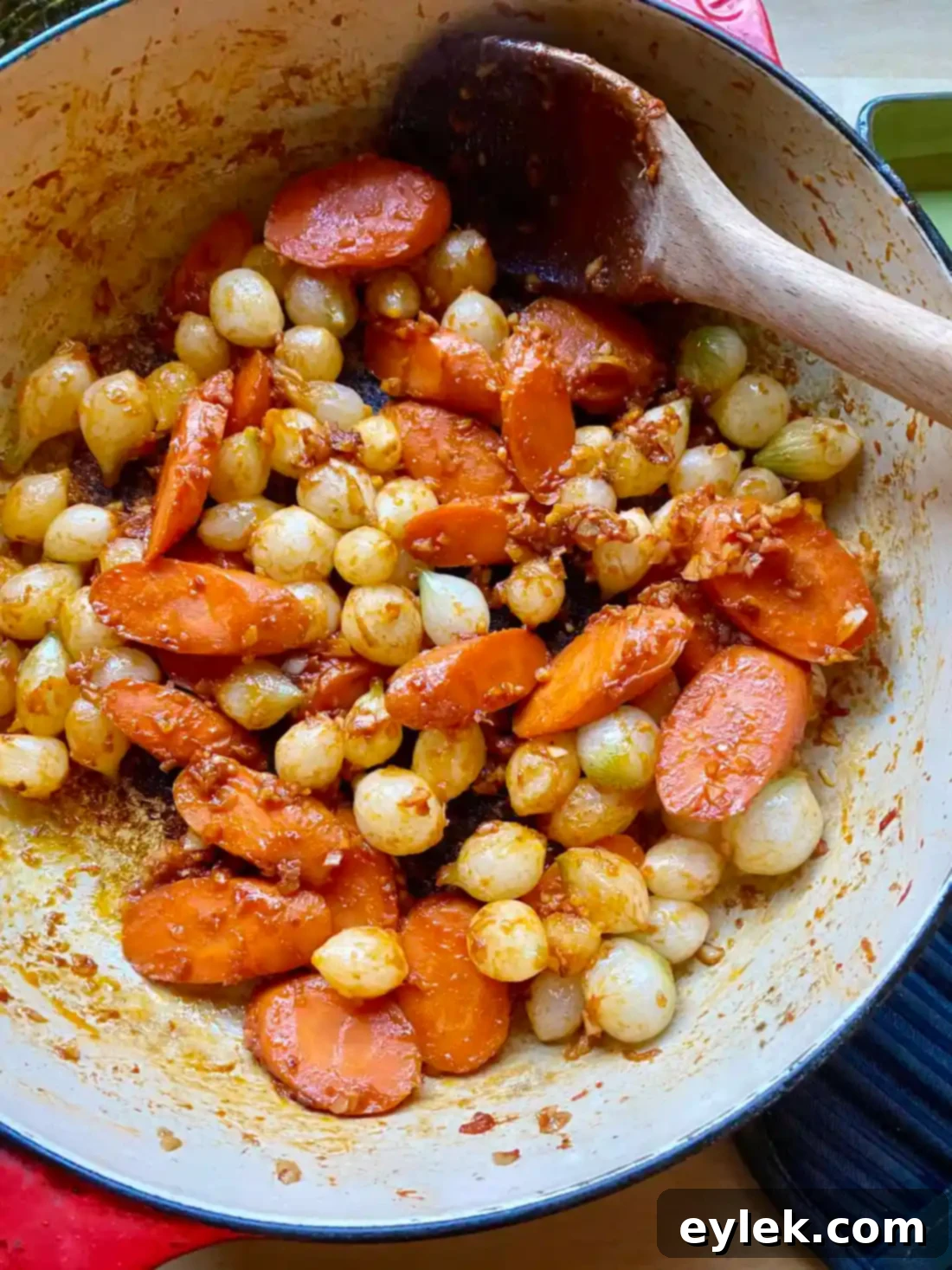
- Add the tomato paste and cook, stirring constantly, until deepened in color, about 3 minutes.
- Pour in the dry red wine, scraping up any brown bits.
- Cook, stirring occasionally, for about 5 minutes until reduced by about one-third.
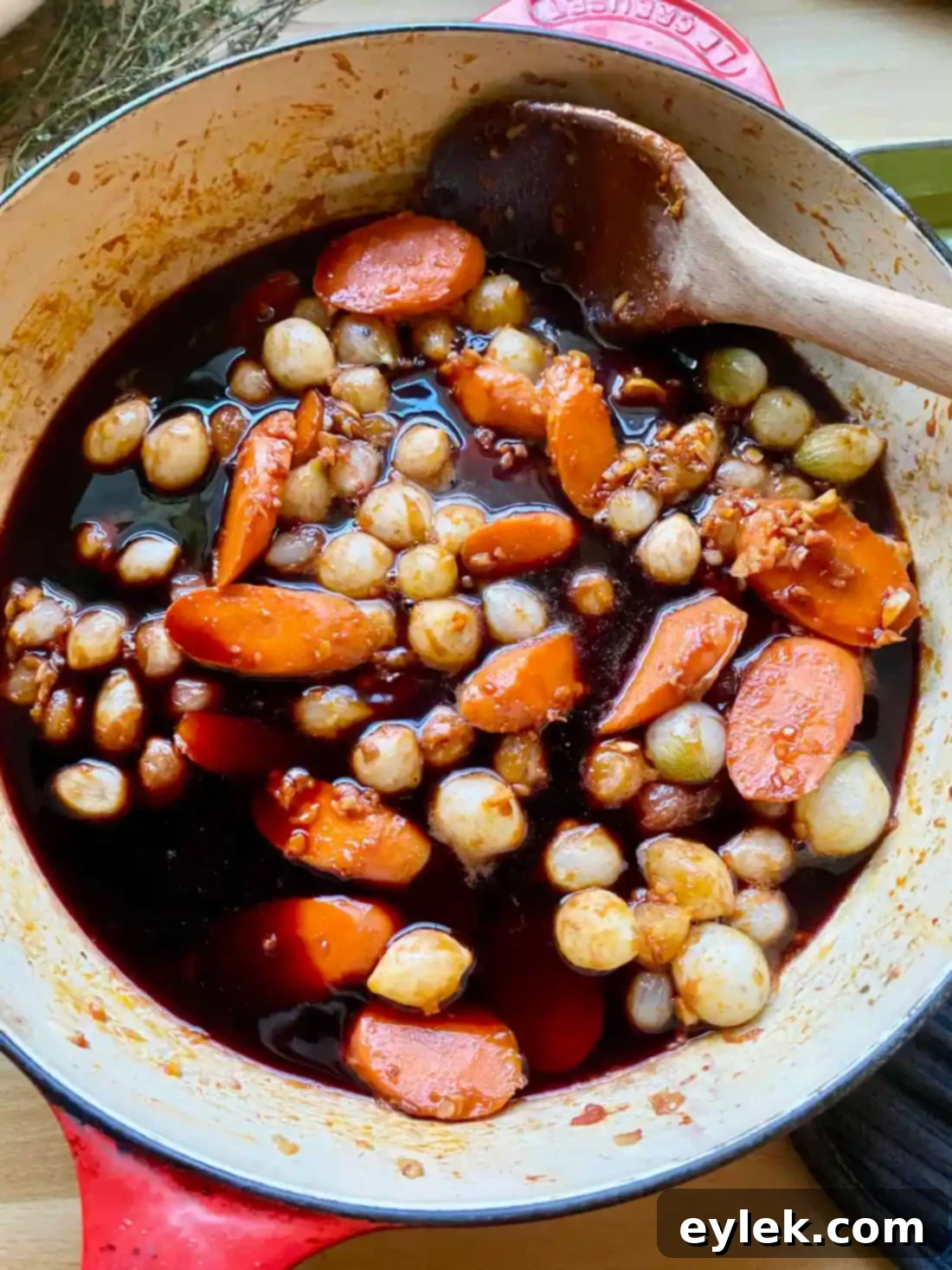
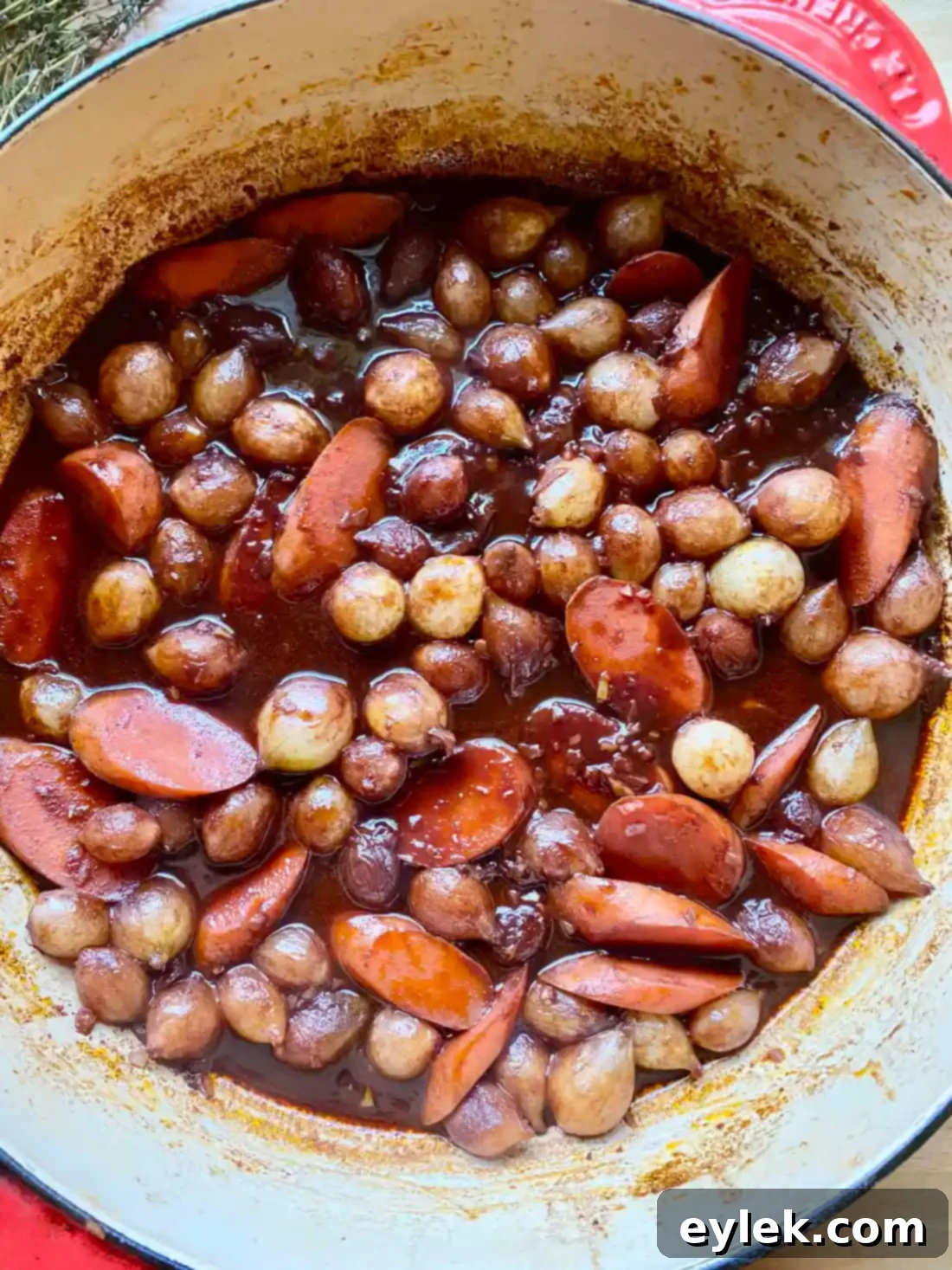
- Add the sprigs of fresh thyme, bay leaf, soy sauce and salt to the mixture.
- Hold a fine-mesh sieve over the skillet & pour the reserved dried mushroom soaking liquid through.
- Discard the mushrooms that are remaining in the sieve.
- Season generously with freshly ground pepper.
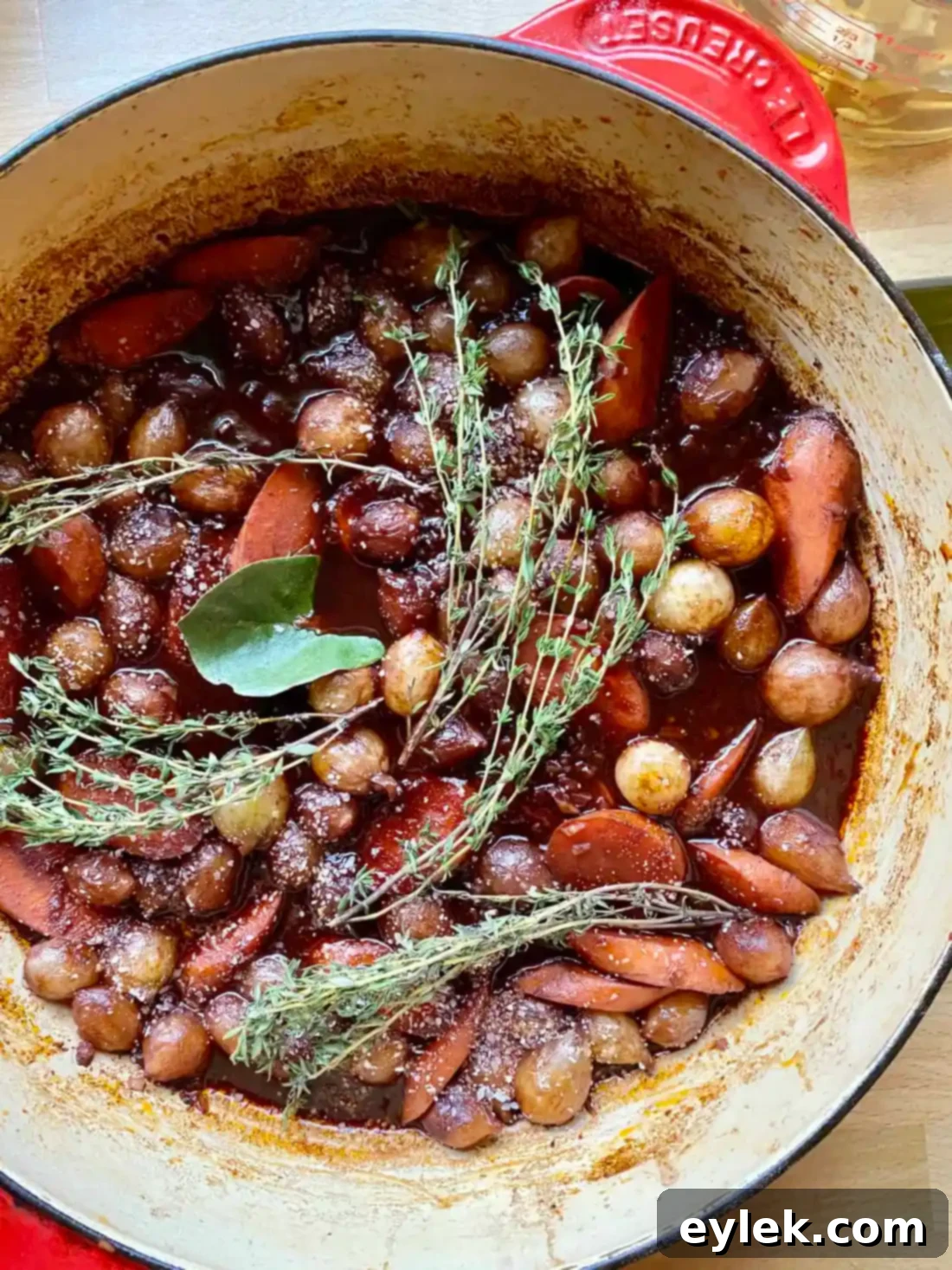
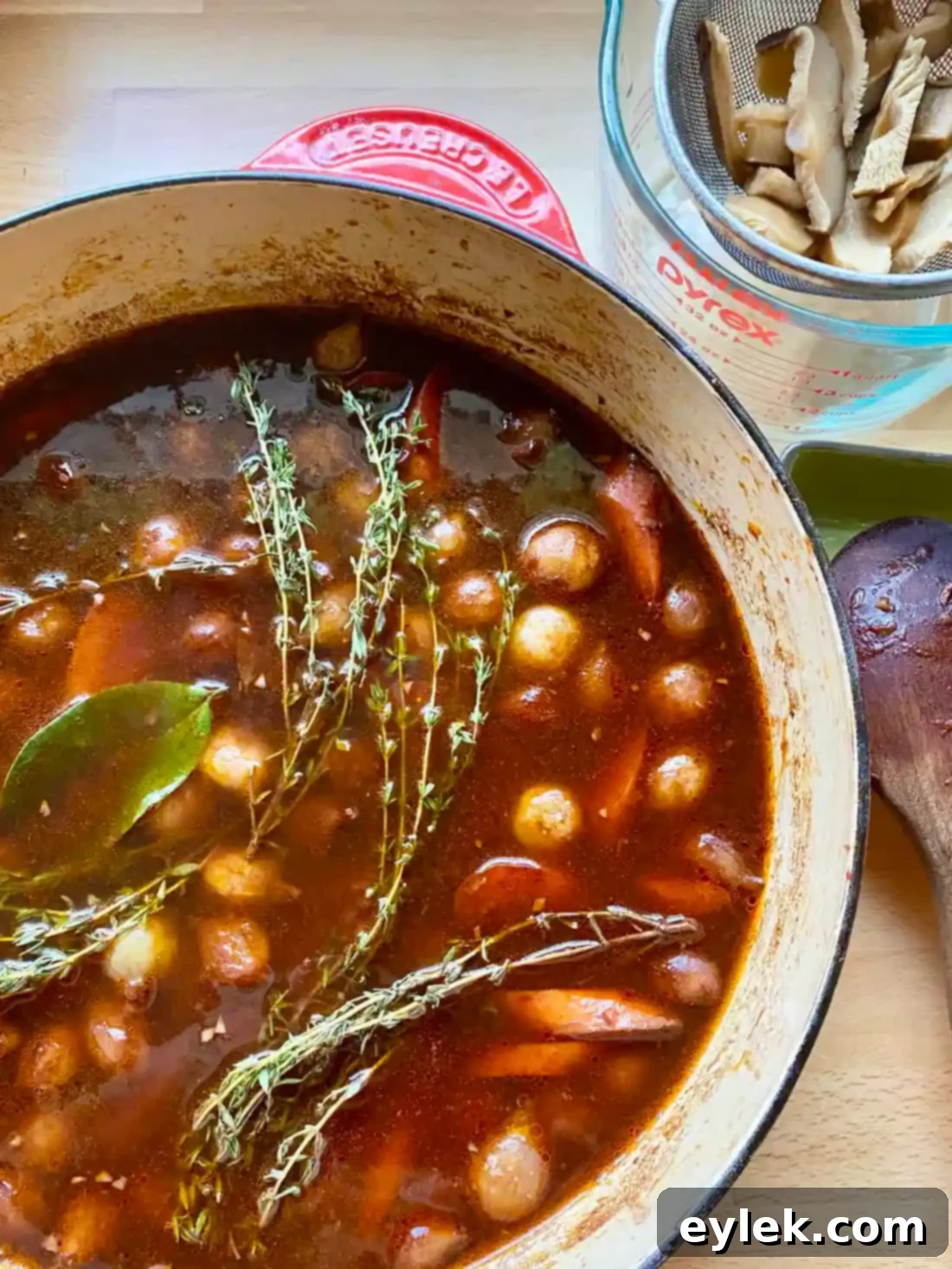
- Bring to a boil and cover the skillet.
- Reduce the heat so the mixture maintains a gentle simmer.
- Cook, stirring occasionally, until the carrots and onions are tender for about 45 to 50 minutes.
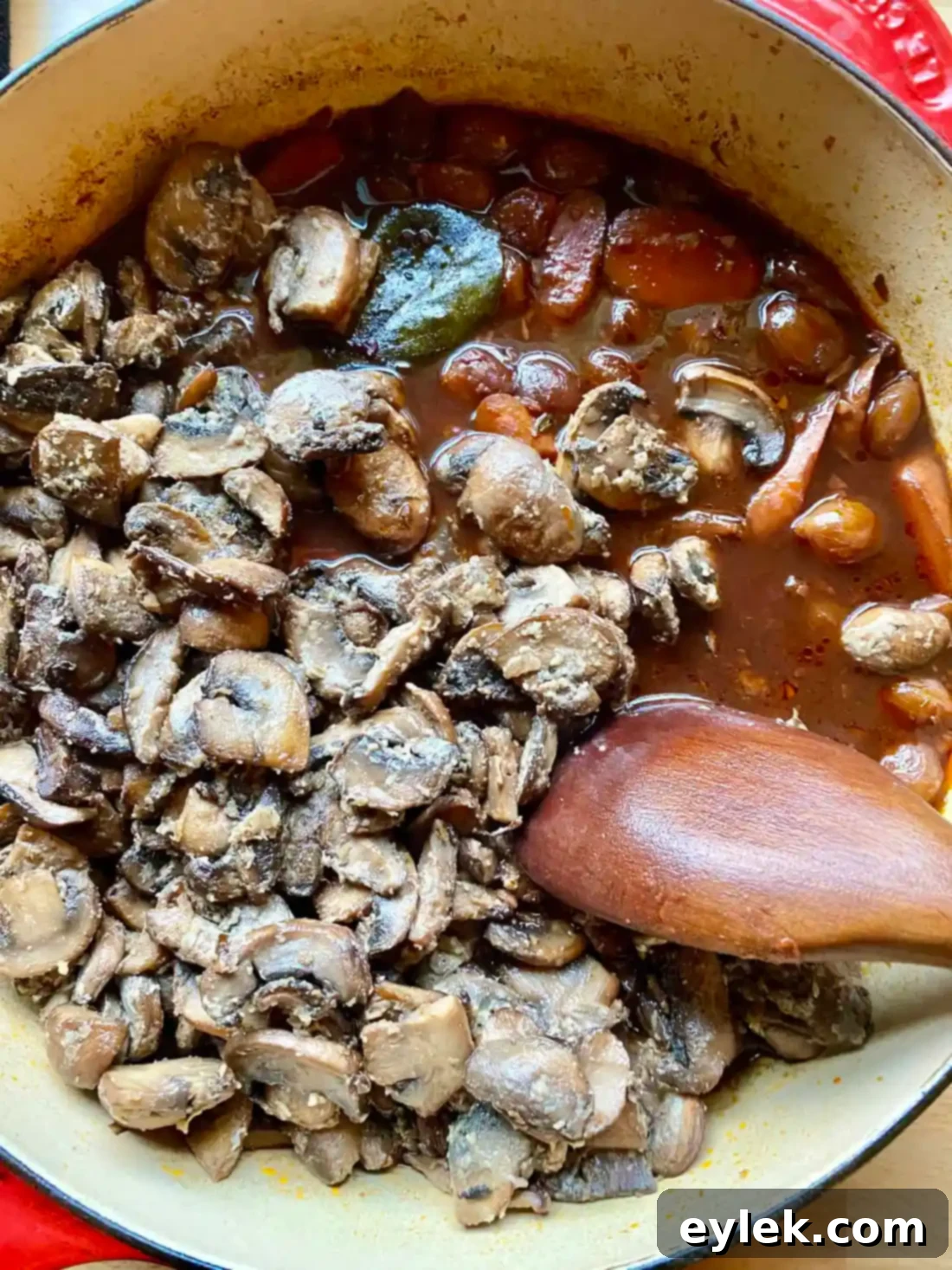
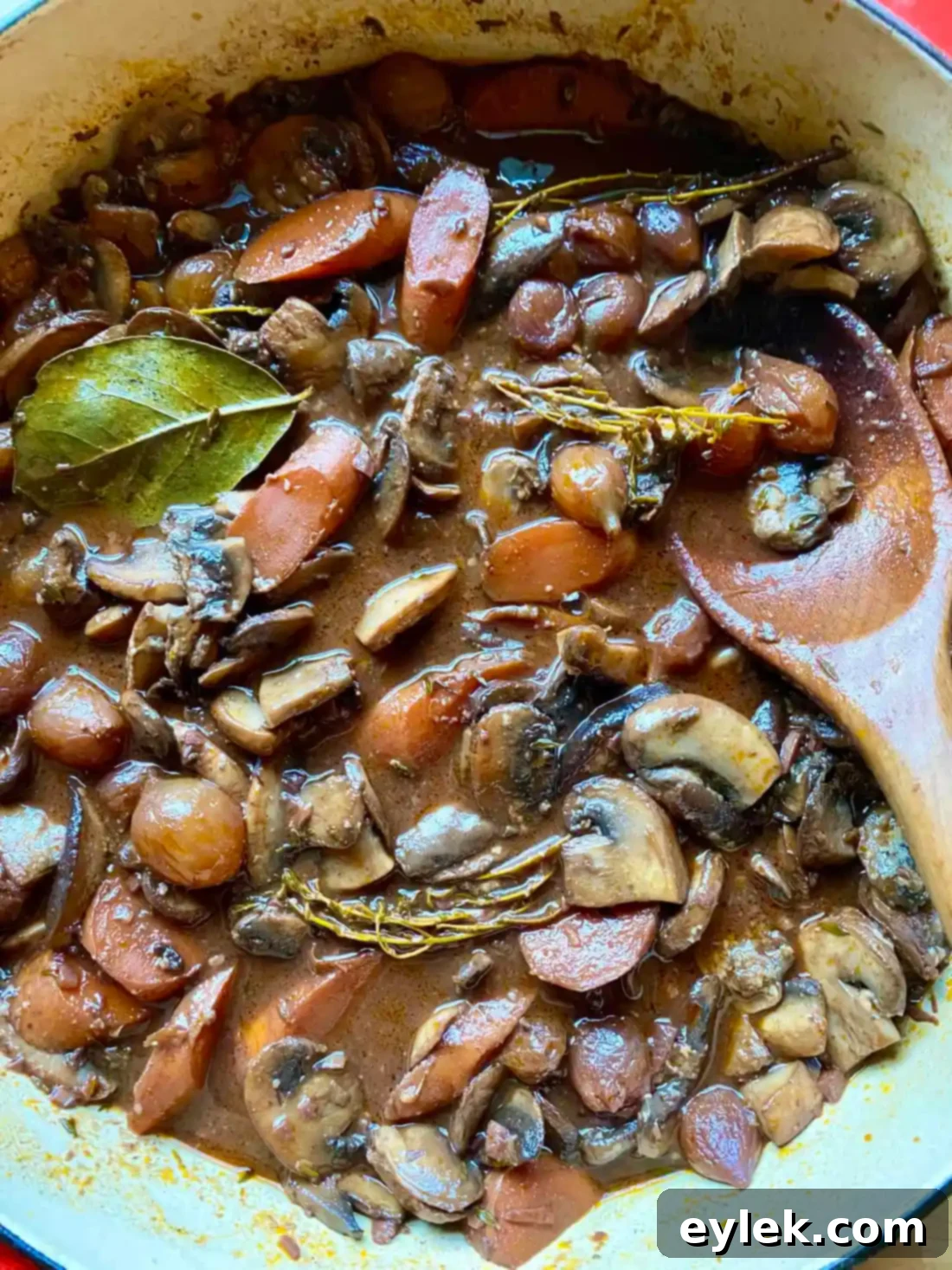
- Uncover and return the reserved caramelized mushrooms to the skillet.
- Cook, uncovered over low-medium heat, stirring occasionally.
- The mixture will thicken slightly & mushrooms will be tender in about 20 minutes.
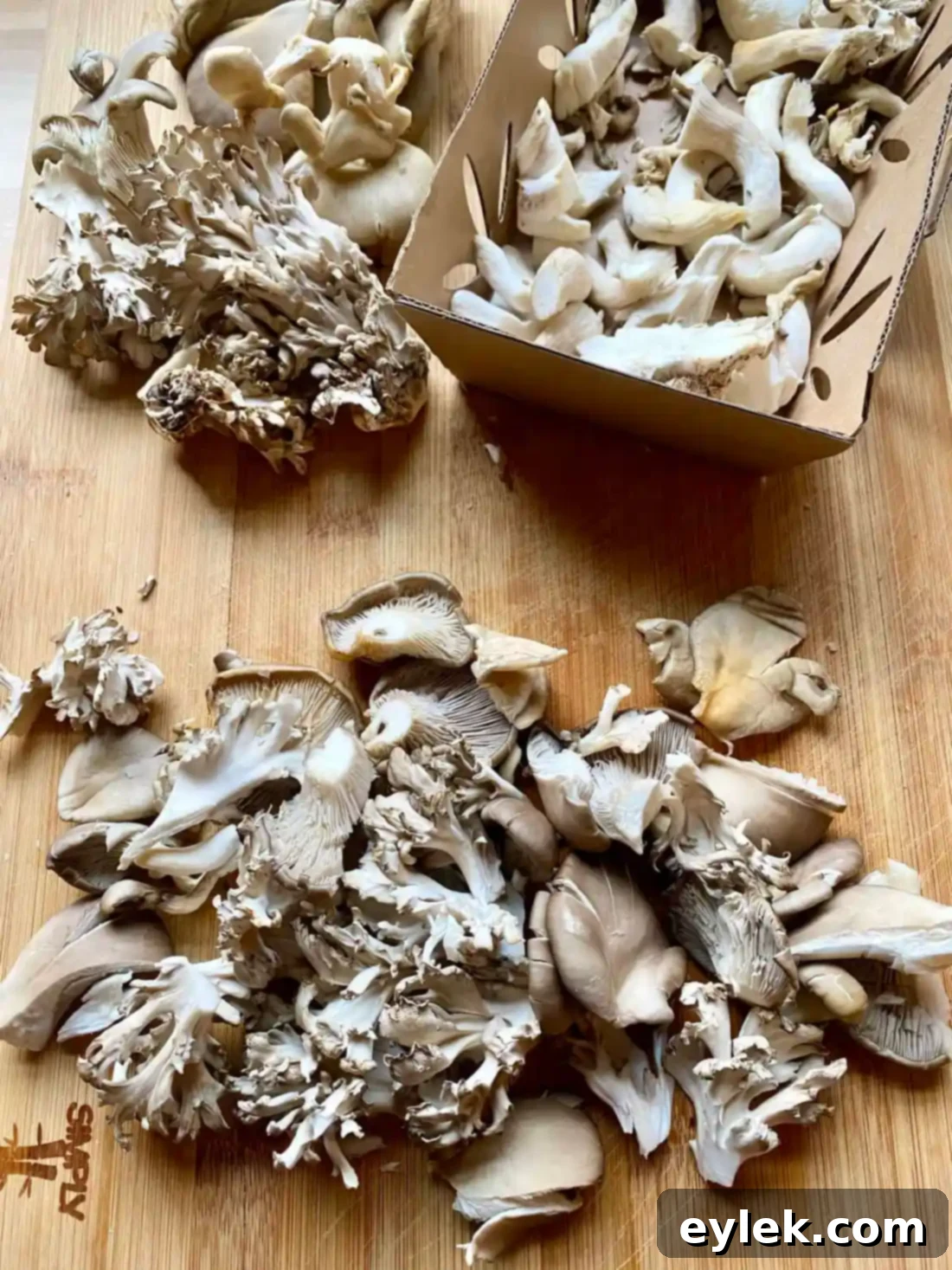
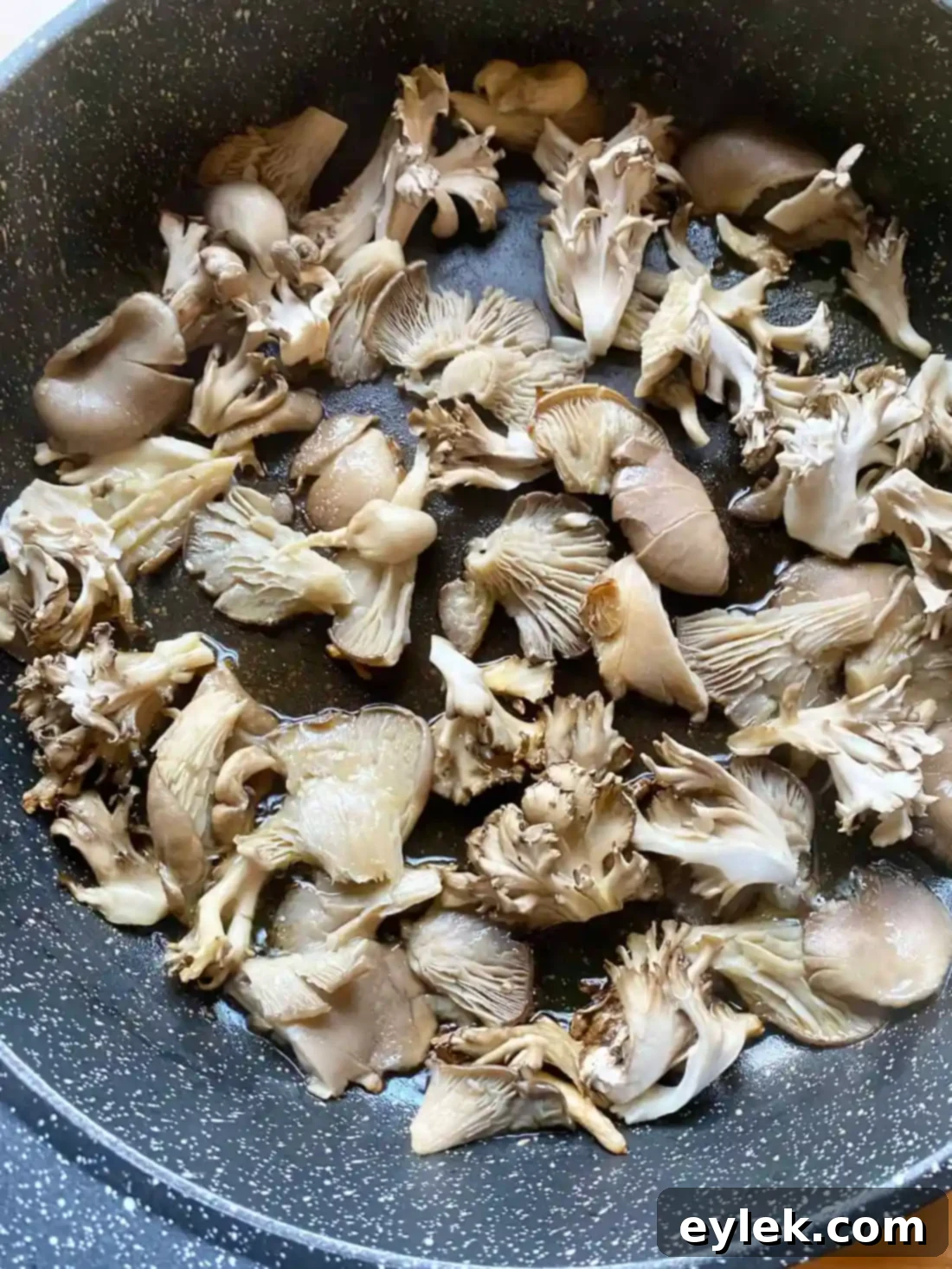
- Meanwhile, heat the olive oil in a large nonstick skillet over medium-high heat.
- Add 8 to 12-ounces of the maitake or oyster mushrooms in a single layer.
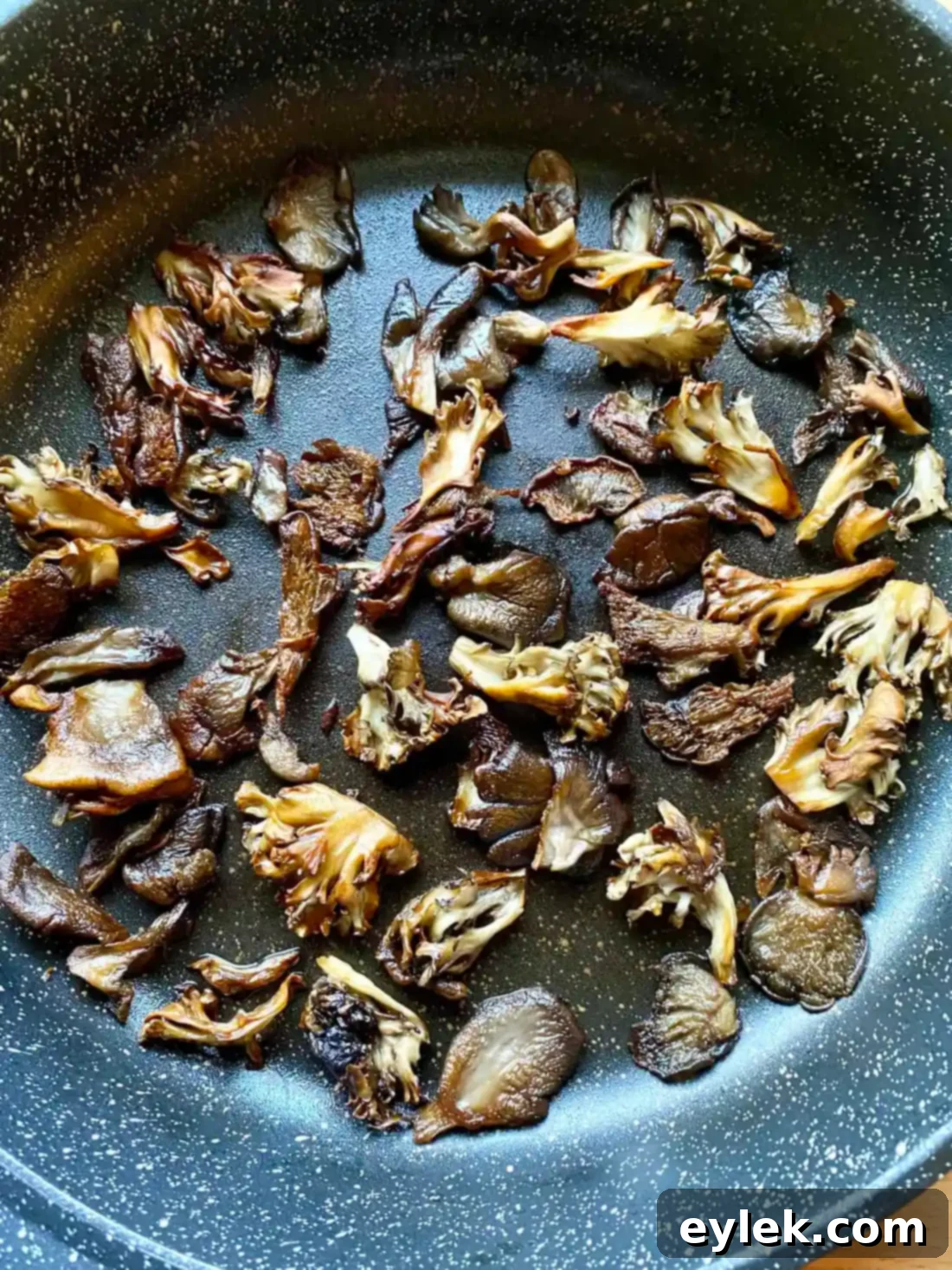
- Cook, undisturbed, until deeply browned and crisp underneath, about 5 minutes.
- Turn and cook until other side is golden, about 4 minutes.
- Set aside to be used just before serving.
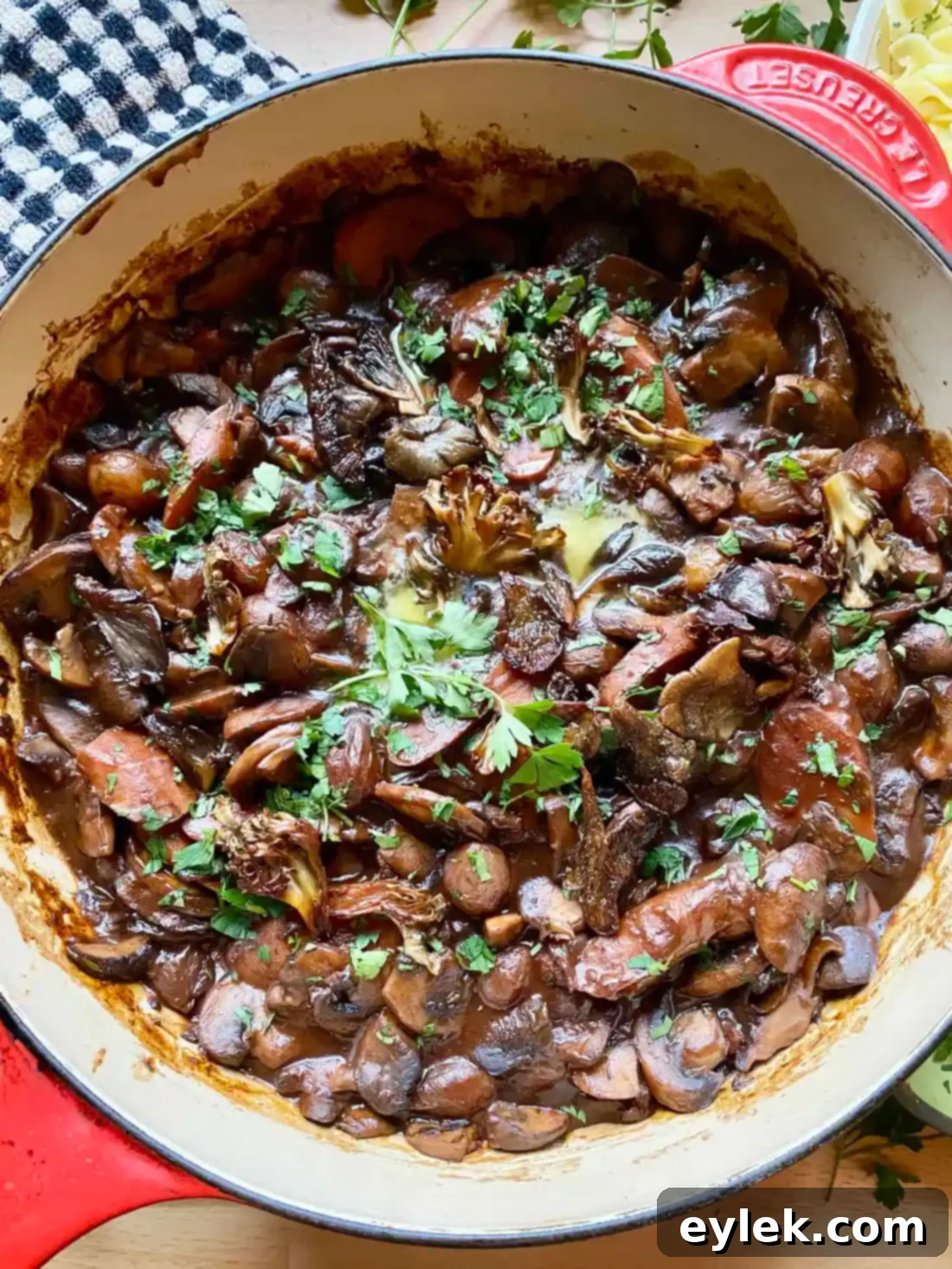
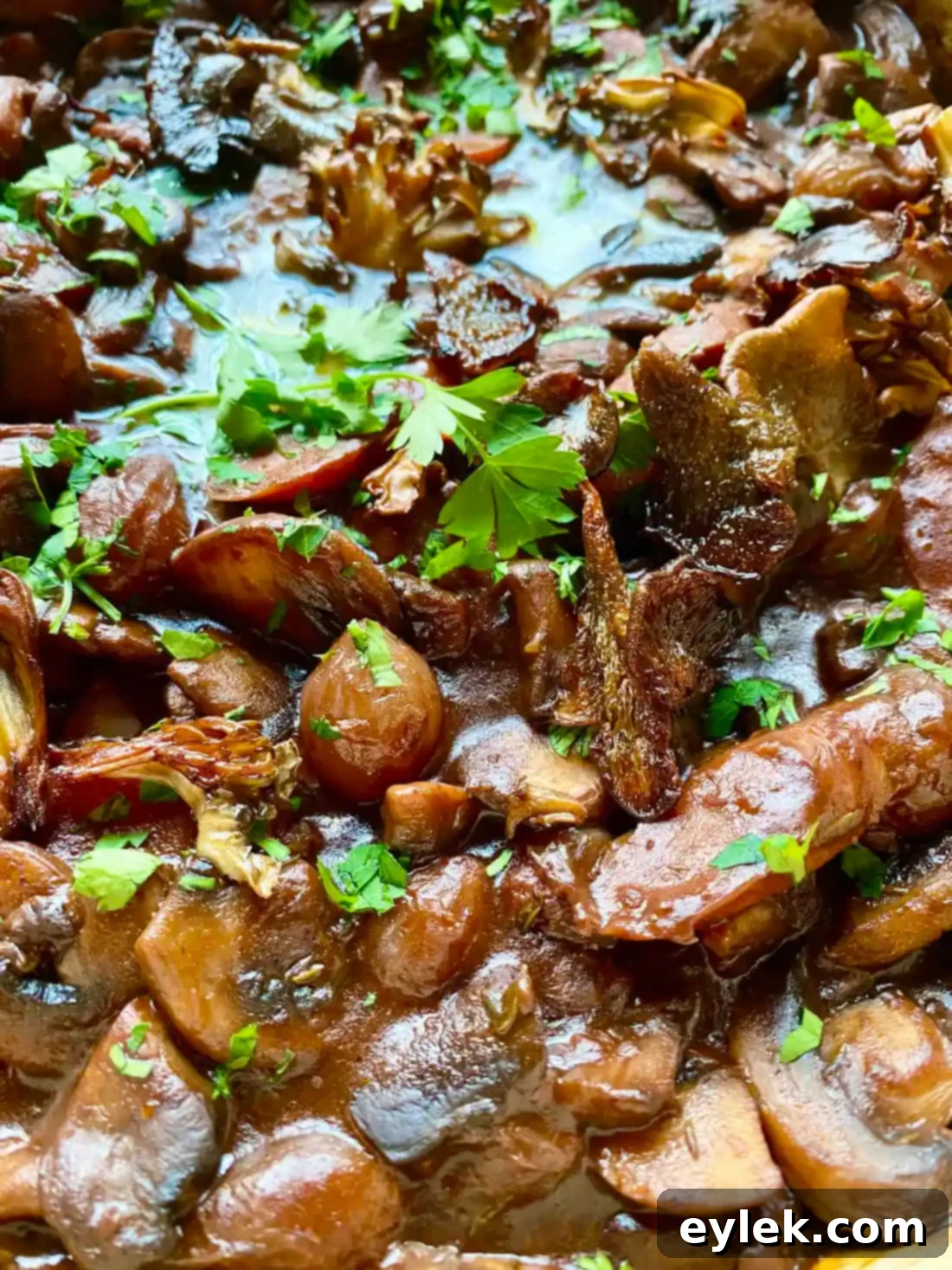
- Stir the remaining 2 tablespoons unsalted butter into the mushroom bourguignon.
- Remove from heat and if needed, season with more salt and/or pepper.
- Remove the thyme and bay leaf; discard.
- If desired, add some finely chopped fresh parsley for color and texture.
- Spoon the crispy maitake or oyster mushrooms on top.
- Alternatively, the crispy mushrooms can be reserved to top off each individual serving.
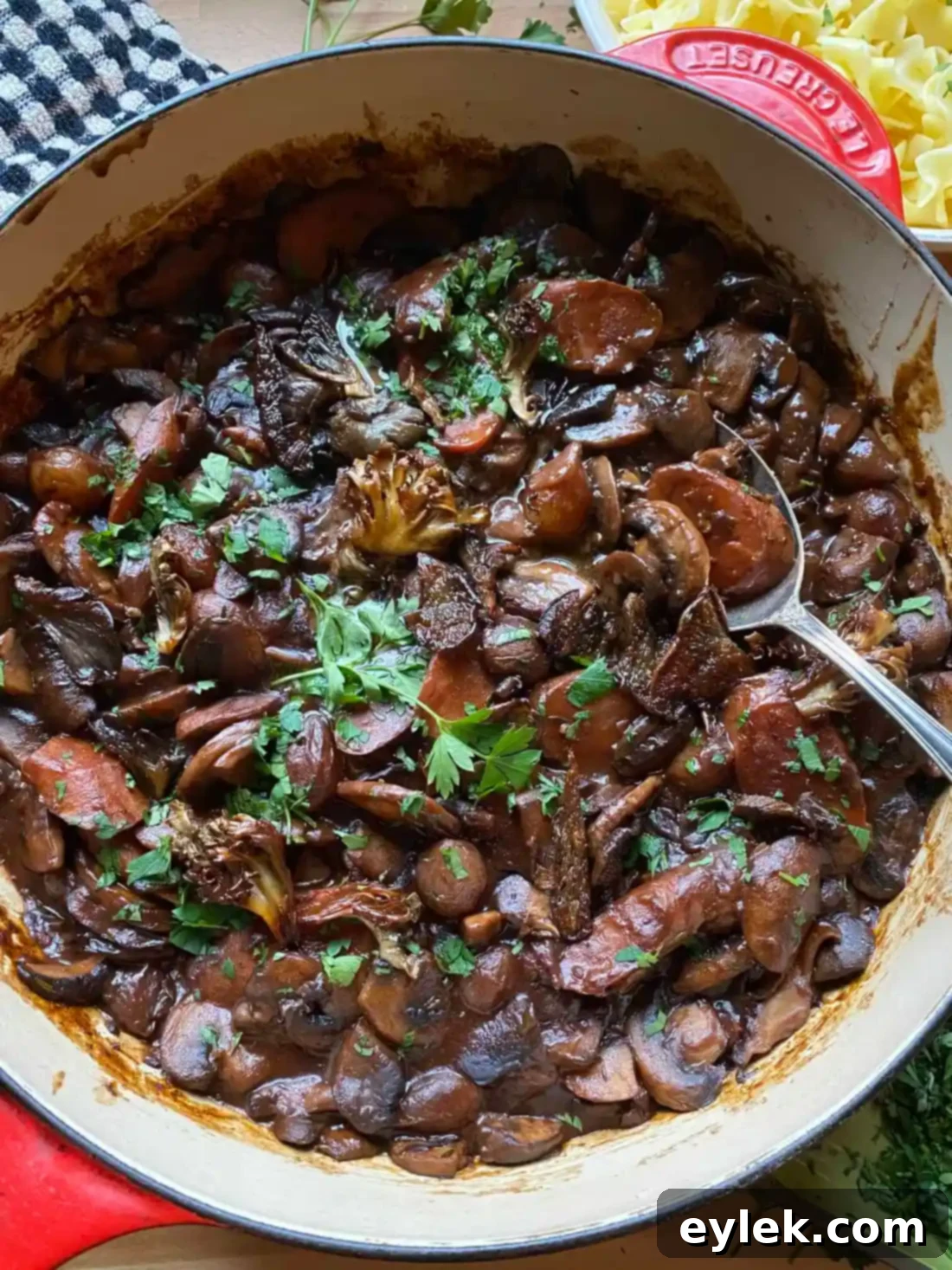
- To serve, divide buttered cooked egg noodles, mashed potatoes or cooked polenta among plates for individual servings.
- Spoon mushroom bourguignon over top.
- Drizzle each serving with a little sherry wine vinegar or red wine vinegar.
- If desired, sprinkle some finely chopped parsley over the top.
Can You Make Mushroom Bourguignon Ahead of Time?
Absolutely! Make it a day ahead without the crispy mushrooms, transfer to an airtight container and chill. It actually may be better the next day with more time for the flavor to develop.
When ready to enjoy, bring to a simmer over medium heat, adding splashes of water or broth to loosen as needed. If trying to keep this meatless, vegetable broth or stock is recommended. Otherwise, beef broth or stock would be another option.
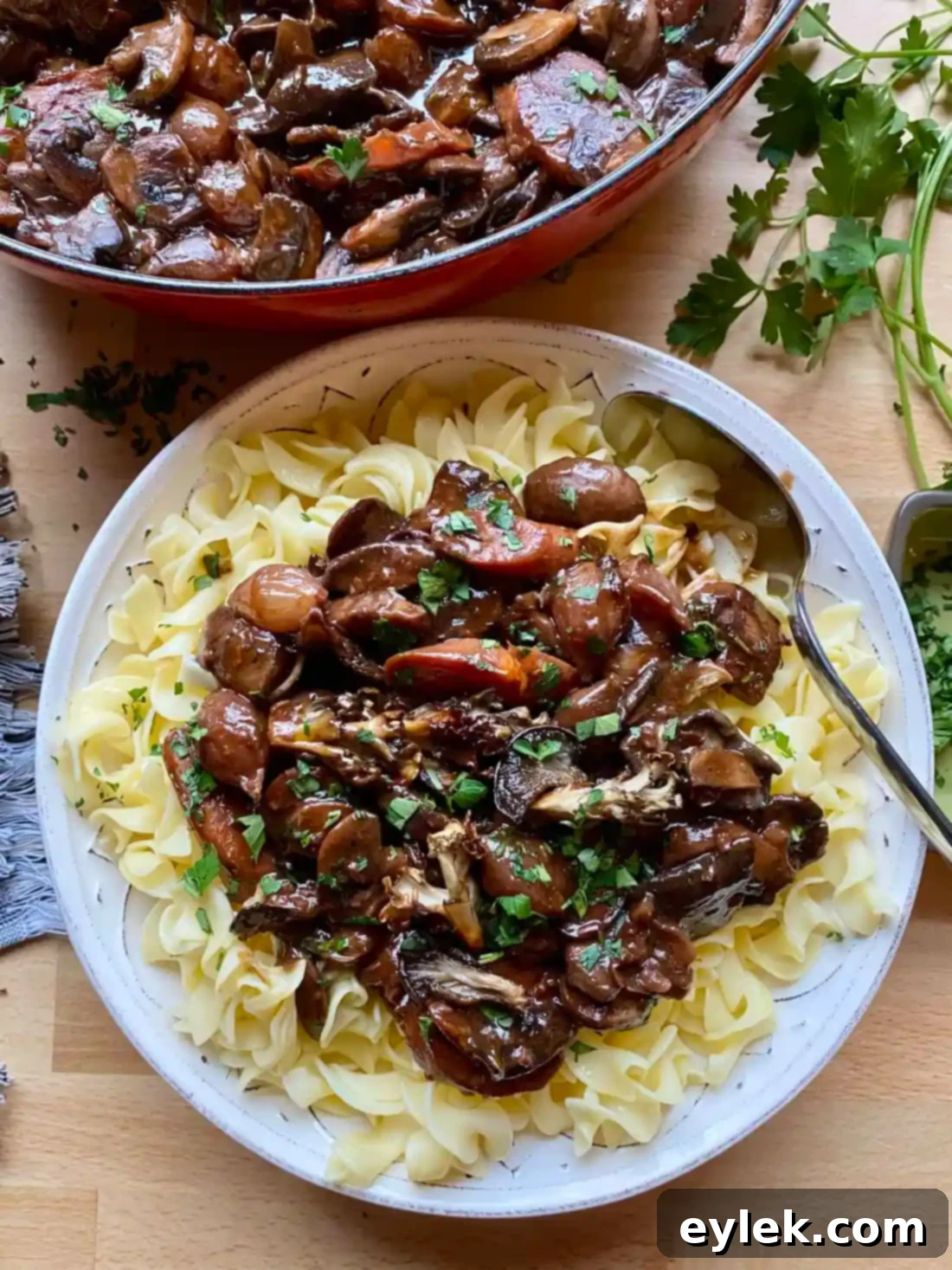
The Best Way to Enjoy Your Mushroom Bourguignon
- My family’s first choice is a generous mound of this goodness piled on top of buttered cooked egg noodles. A lightly dressed green salad and crusty bread complete the meal.
- Mashed potatoes or cooked polenta also provide a delicious base.
- Imagine some of this deliciousness served alongside your freshly roasted meat or chicken.
- Grill a few slices of ciabatta bread and top it off with a spoonful along with your favorite grated cheese.
- For a special finishing touch, a dollop of sour cream or crème fraîche adds a luxurious, creamy texture.
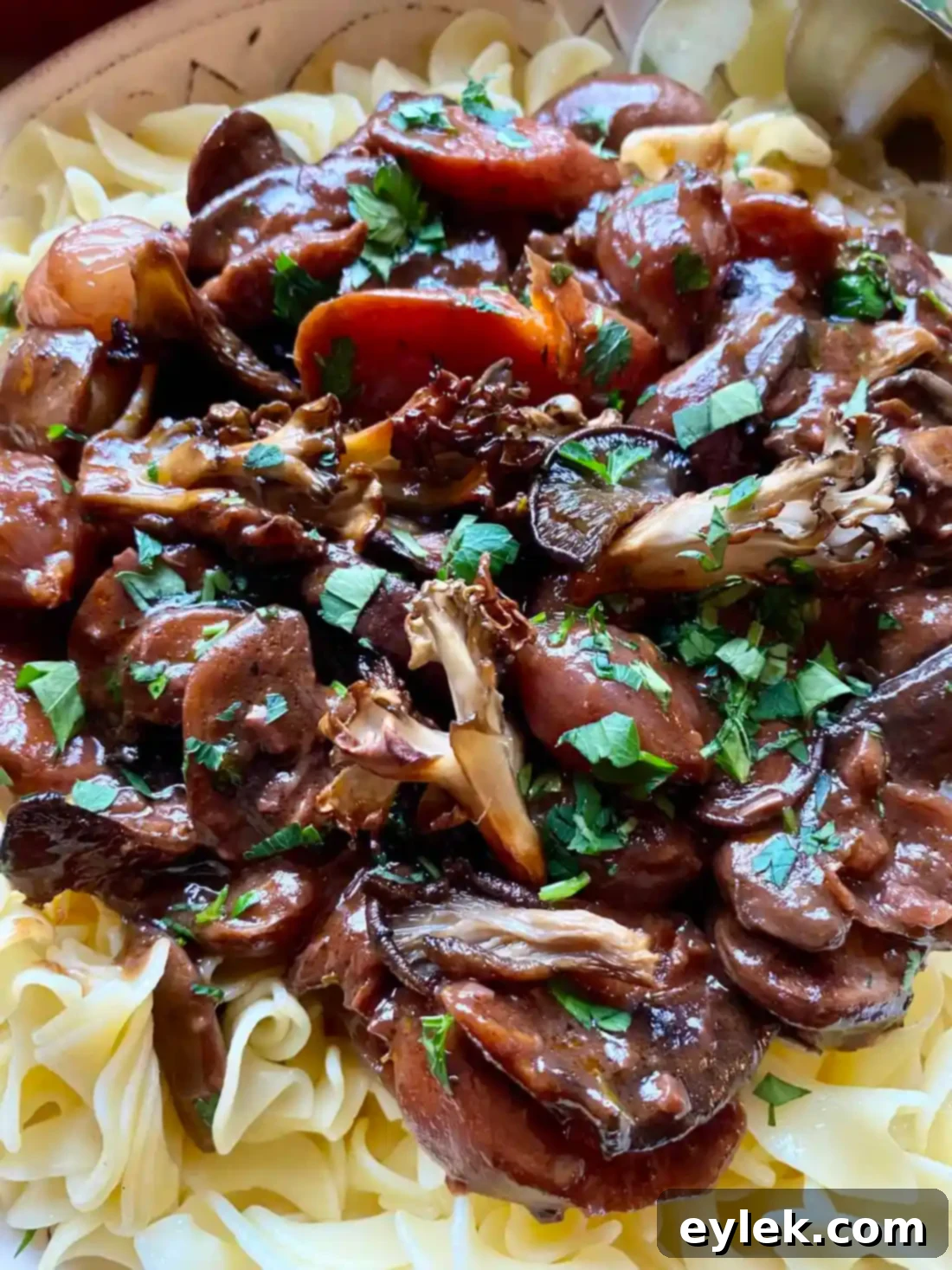
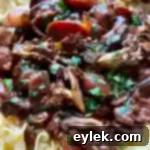
Rich & Flavorful Mushroom Bourguignon
Adapted from Bon Appétit
This umami-rich dish provides a delicious vegetarian alternative to the traditional beef bourguignon.